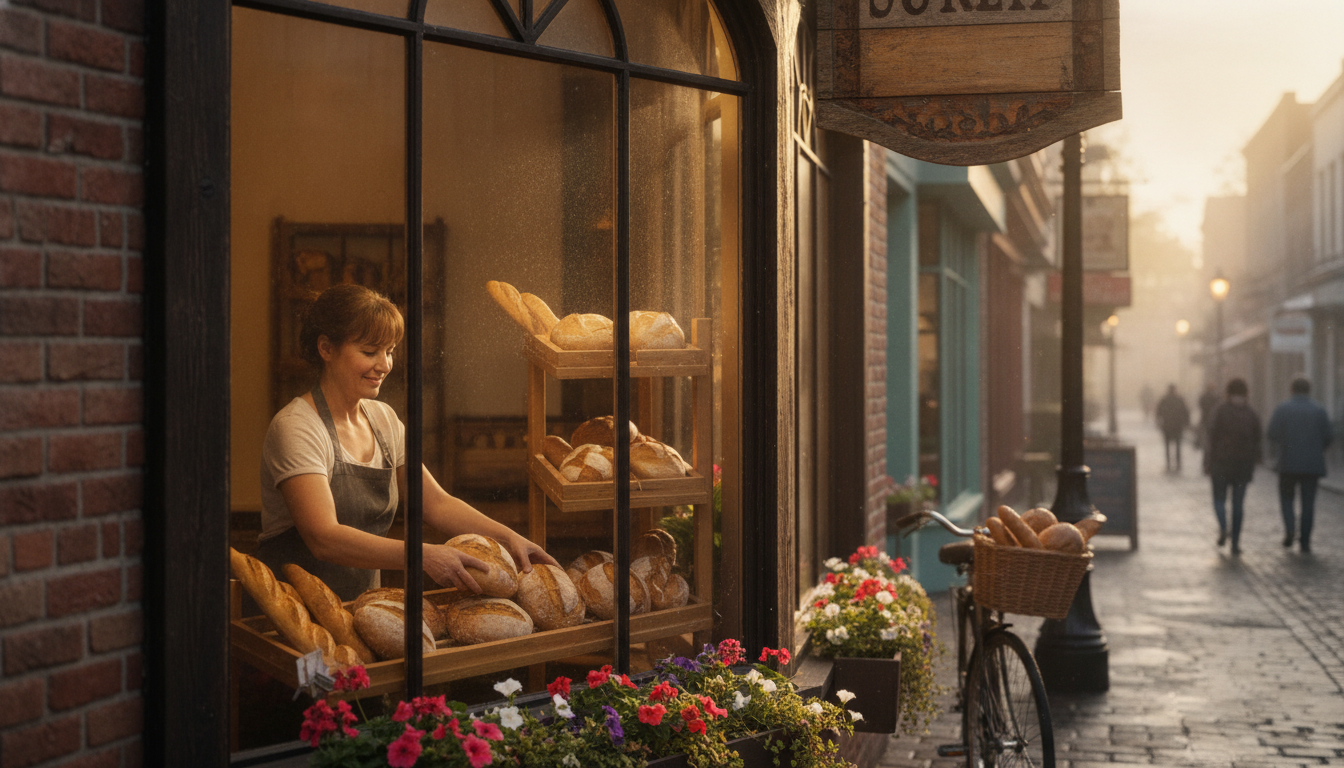
Most local business owners don't have a marketing problem. They have a consistency problem dressed up as a time problem. The pattern is almost universal: a burst of motivated posting every day for two weeks, then a slow fade, then six weeks of silence, then guilt, then another burst. The result is an online presence that looks abandoned precisely when new customers are checking it. The fix is not more time or more effort - it is a tighter structure. Twenty minutes, once a week, built around three specific moves. That is the entire system.
Why Consistency Beats Frequency for Physical Local Businesses
Posting algorithms reward accounts that show up reliably over accounts that post in frantic sprints. More importantly, your actual customers - people within a mile or two of your front door - do not need seventeen posts a week. They need to see you regularly enough that when they think of a haircut, a Saturday lunch, or a birthday gift, your name surfaces without effort. Three well-placed posts a week, every week, does more for that mental availability than daily posting done inconsistently. Frequency without consistency is noise. Consistency without frequency is presence. Presence is what fills seats and drives walk-ins.
The businesses winning locally right now are not the ones posting the most. They are the ones who never fully disappear.
The Exact 20-Minute Weekly Ritual
This ritual has three moves. Each takes roughly five to seven minutes. Do it Monday morning with a coffee before the day opens up. Here is the structure, move by move.
- Monday - Anchor Post (7 minutes): Plan one piece of content that represents your business at its best this week. A dish you are proud of, a service you want to spotlight, a behind-the-scenes moment. This is your brand signal - the post that tells someone new exactly who you are. Write a caption that leads with one specific detail, not a generic greeting. If you use an AI tool like Rulrr to brief it, you get a ready-to-use caption, hashtag suggestions, and a posting time in under two minutes.
- Wednesday - Reactivated High-Performer (5 minutes): Go back six months in your feed and find one post that earned above-average engagement. Refresh the caption slightly - update the detail, swap a phrase, add a timely hook. Reschedule it. Between 40 and 60 percent of your current followers never saw that post the first time. You are not recycling; you are reaching a genuinely new audience with content that already proved itself.
- Friday - Offer-Driven Story (6 minutes): Create one short-form story or reel with a clear, low-friction call to action tied to the weekend. Not a discount - an invitation. 'We have twelve portions of the lamb left this weekend.' 'Saturday slots just opened.' 'New stock landed - first look inside.' Stories disappear in 24 hours, which creates urgency without you having to manufacture it artificially.
The One Habit That Makes the Ritual Stick
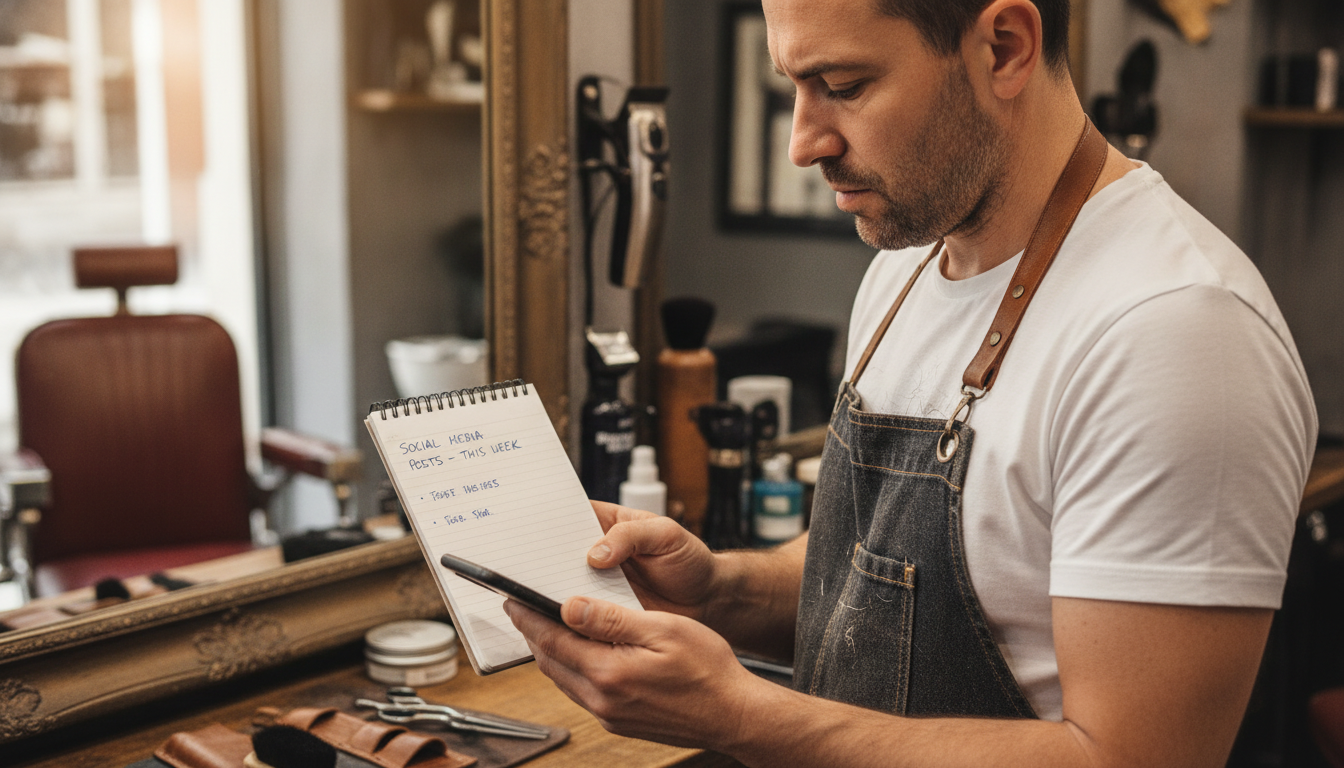
The reason most owners abandon their content plans is not laziness - it is standing-start friction. Every week begins with a blank page and a creeping dread. The ritual above eliminates that friction by constraining your choices. You are not asking 'what should I post this week?' You are asking three smaller questions, each with a known answer format. The anchor is your best current offer or moment. The mid-week post is already written. The Friday story is tied to this weekend's availability. None of these require creative inspiration. They require only information you already have.
Platforms like Rulrr make this even faster by letting you brief all three posts in a single session - describing your week's priorities and getting back draft captions, image prompts, and scheduling suggestions in minutes. The goal is not to automate your voice; it is to eliminate the standing-start problem so you show up every single week without the ritual costing you a meaningful chunk of your day.

What One Month of This Ritual Actually Looks Like
Four weeks in, you will have published twelve posts: four anchor pieces that build brand recognition, four reactivated high-performers reaching followers who missed them the first time, and four Friday stories that create direct weekend demand. That is a complete, varied content mix - educational, social-proof, and promotional - without a single late-night caption session. By month two, the Wednesday reactivation step gets easier because you have a larger bank of proven content to pull from. The system compounds. The blank page never comes back.
Two Rules to Protect the Ritual
- Never add a fourth post to the ritual week. The moment you decide 'I'll just do one more,' you have turned a discipline into a burden. The power of twenty minutes is that it has a hard stop. Protect it.
- Batch the brief, not the execution. Use your Monday session to plan and draft all three posts for the week. Schedule them in advance. Do not leave Wednesday and Friday as live decisions - those are the days you are most likely to be swamped and most likely to skip.
The owner who shows up with three solid posts every week for six months will outrank, out-trust, and out-convert the one who posts daily for three weeks and vanishes.
The twenty-minute ritual is not a shortcut. It is a more honest accounting of what local business marketing actually requires: not volume, not viral moments, not a content team - just a reliable, repeatable structure that keeps you visible to the people most likely to walk through your door. Run it for eight weeks before you judge it. The compounding is slow and then suddenly obvious.