Acquisition costs across paid social and search have climbed 30-40% in the last three years. Organic reach is less predictable than ever. And yet there are local businesses - a bakery in Bristol, a barbershop in Austin, a yoga studio in Amsterdam, a family-run restaurant in Chicago - quietly doubling the rate at which their customers come back, without running a single new ad. The difference isn't budget. It isn't even a better product. It's that they stopped treating retention as a vague aspiration and started running it as a deliberate, repeatable system built on four structural habits: timing, trigger, message, and offer. If any one of those four is missing or inconsistent, the system leaks. If all four are in place and automated, it compounds.
Why Repeat Visit Rate Compounds Faster Than Any Paid Channel
Most local business owners think about retention the way they think about the weather - something that happens to them, not something they manage. The customer either comes back or they don't. But repeat visit rate is actually a managed output. When you increase the percentage of first-time visitors who return within 60 days by just 15 percentage points, the revenue effect compounds across every subsequent month without additional spend. A new paid campaign generates revenue once. A retention system generates revenue continuously from the base you've already paid to acquire. The businesses in this piece didn't stumble into better retention. They built it deliberately, and the structural difference between them and their neighbours comes down to four things they do consistently.
We stopped trying to get more people through the door and started trying to get the same people back twice as often. Within four months, Thursday nights filled themselves.
The Four Structural Habits That Separate High-Retention Businesses
These four habits aren't complicated in isolation. The difficulty - and the reason most owners never implement them properly - is doing all four consistently, on the right customers, at the right moment, without it requiring active daily attention. That's the operational problem retention systems have to solve.
Habit 1 - Timing: Follow Up While the Memory Is Still Warm
The window between a first visit and a follow-up message is not flexible. Reach a customer within 24-48 hours of their visit and you are interrupting a positive memory - they remember what they liked, they haven't yet built habits around a competitor, and they're warm to you. Wait a week and that warmth is already cooling. Wait a month and you're a stranger asking for something. The bakery in this study sent a short, personal-feeling message at the 36-hour mark. Not a newsletter. Not a generic 'thanks for visiting.' A brief, specific note referencing the day of the week and what they ordered. Open rates were above 60%. The yoga studio sent a follow-up at 24 hours with a free class offer valid for the next 14 days only. Forty-one percent of first-timers converted to a second visit within the window, compared to 19% the previous quarter when no follow-up was sent.
Habit 2 - Trigger: Use Behaviour, Not the Calendar
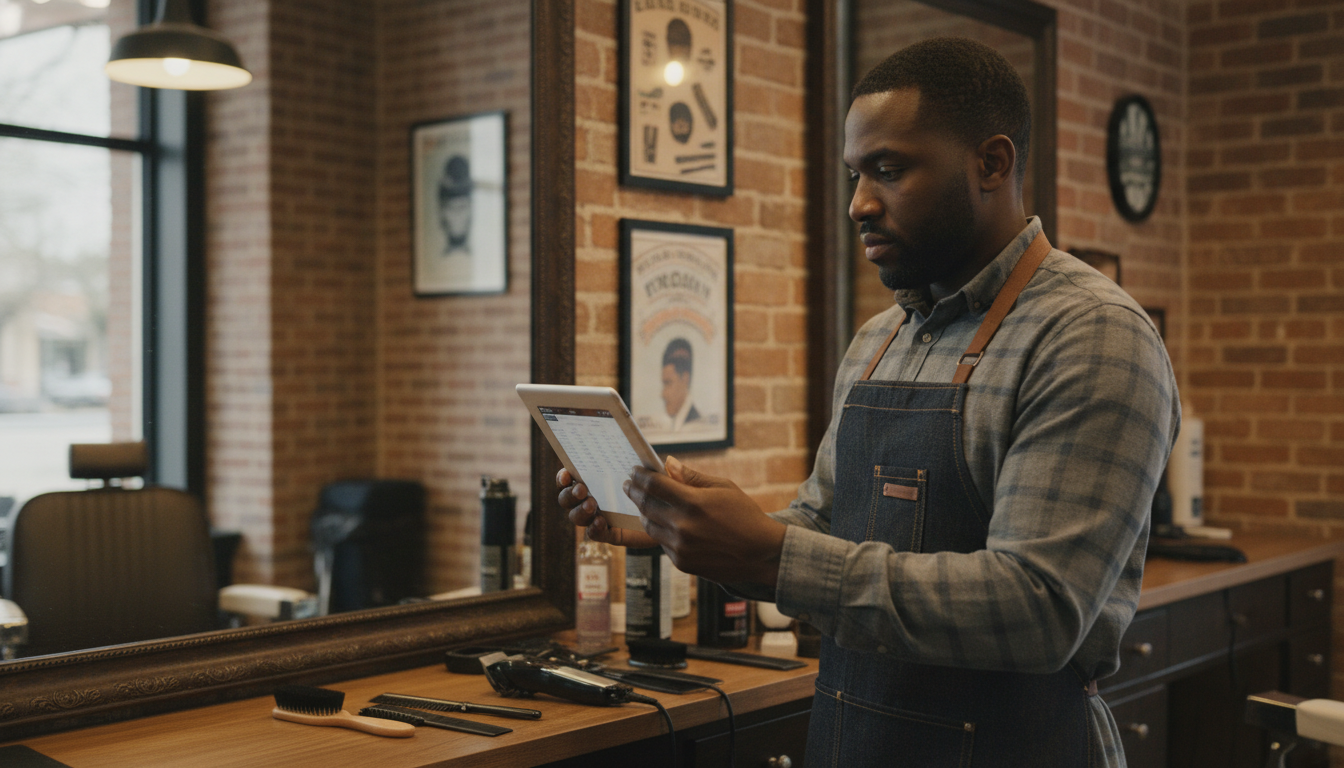
Calendar-based messages - a birthday email, a monthly newsletter - are better than nothing. But behaviour-triggered messages outperform them by a significant margin because they respond to what the customer actually did, not what month it is. The barbershop in Austin tracked average return intervals through their POS and booking data. Their average customer returned every 28 days. When a customer crossed 35 days without a booking, that gap itself became the trigger - an automated message went out at day 36, not because it was Tuesday and they were sending the weekly blast, but because that specific customer was outside their normal window. That's the difference between broadcasting and responding. The restaurant in Chicago used spend-based triggers: a customer who had visited three times but not in 45 days received a different message to a customer who had visited once six weeks ago. Same channel, same automation, different message - because the trigger carried context.
Habit 3 - Message: Make It Feel Like It Was Written for One Person
Retention messages fail when they feel like mass marketing. The customer who just had a facial at your skincare clinic does not want a bulk SMS that says '20% off all treatments this week.' They want to feel like the business remembers them. The skincare clinic in Amsterdam used purchase history to vary the body of every message - referencing the specific treatment, suggesting a natural follow-up service based on what they'd had done, and using the customer's first name in the first line. This is not personalisation as a gimmick. It's personalisation as a signal that the relationship is real. Tools like Rulrr make this operationally achievable for a single-location business by connecting POS transaction data to the message content itself - so the owner doesn't have to write 200 individual follow-ups. The system writes them, the owner approves the template once.
Habit 4 - Offer: Give Them a Reason to Choose Now, Not Someday
The weakest retention messages end with 'we hope to see you again soon.' The strongest end with a specific, time-bounded reason to act. This is not the same as a discount. The bakery offered a complimentary pastry with any purchase over a certain amount - valid for seven days. The barbershop offered priority booking for the next three weeks. The yoga studio offered a 'second class on us' valid for 14 days. The restaurant offered a reserved table on a quieter Wednesday night with no minimum spend. None of these are margin-destroying discounts. All of them give the customer a frame - a specific reason this week is better than any other week to come back. The offer creates urgency without training the customer to wait for price cuts.
The Real Barrier Isn't Knowledge - It's Memory and Consistency
Every owner who reads those four habits probably already knew most of them conceptually. The problem has never been the knowledge. The problem is that at 7pm on a Tuesday when you have six tables to turn, a supplier on the phone, and a staff member who didn't show up, you are not going to manually pull up your customer list, identify who crossed their return window, write a personalised follow-up, and send it with the right offer attached. You are going to survive the Tuesday. Retention fails because it requires perfect memory and consistent execution at the exact moment an owner has the least capacity to deliver either. The businesses in this piece didn't build superhuman discipline. They built systems - specifically, automated retention flows connected to their transaction data - that do the remembering and the sending regardless of what Tuesday looks like. That's the real structural difference. The four habits are the what. Automation is the how.

From Leaky Bucket to Compounding Engine
When a business runs all four habits consistently - timing, trigger, message, and offer - the repeat visit rate doesn't just improve once. It improves and stays improved, because the system is always running. New customers enter at the top and the retention flow begins immediately. Lapsed customers are caught at the gap before they cross the point of no return. The compounding effect is real: a business that retains 40% of first-time visitors for a second visit generates roughly double the lifetime revenue per acquisition versus one retaining 20%, without touching its ad spend. Platforms like Rulrr are built specifically to connect the POS data that reveals customer behaviour to the automated messaging that acts on it - so the retention system runs as infrastructure, not as a to-do item that gets pushed to next week.
What to Build First If You're Starting From Zero
- Map your current return window: look at your last 90 days of transactions and calculate the average number of days between a customer's first and second visit. That number is your baseline - and the gap beyond it is your trigger point.
- Write one 48-hour follow-up message: a short, warm note sent the day after a first visit. Reference the visit, make it feel personal, include one specific offer with a 14-day expiry. This single message is the highest-leverage thing you can do this week.
- Identify your silent lapsers: customers who visited two or more times but haven't returned in 1.5x their normal interval. These are not lost yet. A single well-timed reactivation message with a genuine reason to return will recover a meaningful percentage.
- Separate your triggers from your calendar: if every message you send goes to your whole list on the same day, you are broadcasting, not retaining. Build at least two behaviour-based triggers - one for the 48-hour post-visit window, one for the lapse gap.
- Automate before you optimise: a good-enough retention message that sends automatically every time will outperform a perfect one you remember to send occasionally. Get the system running first, then refine the copy.
Repeat visit rate is the one number that tells you whether your business is actually building something durable or just running hard to stay still. The businesses in this piece didn't find a new channel or a better creative. They stopped leaking the customers they'd already won. That's the whole thing. Build the four habits, connect them to your data, automate the execution, and the compounding starts on its own.