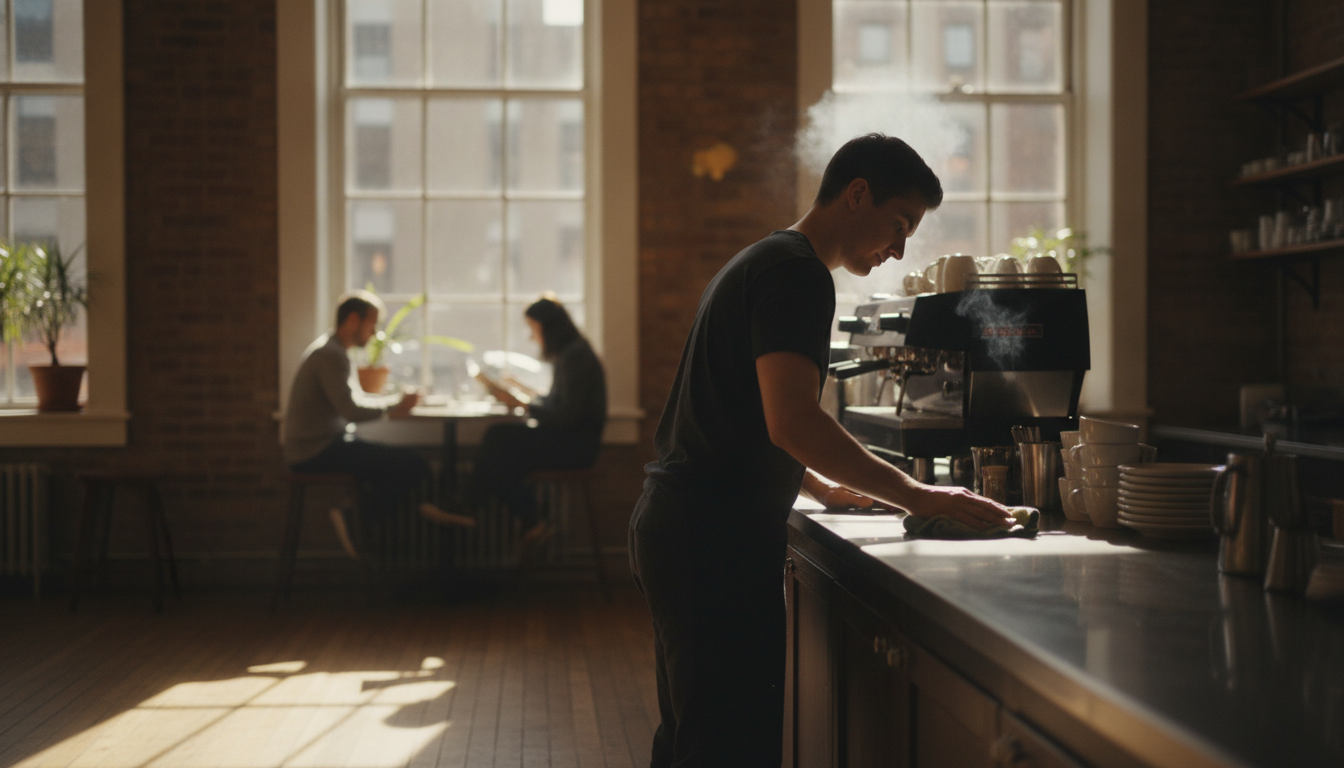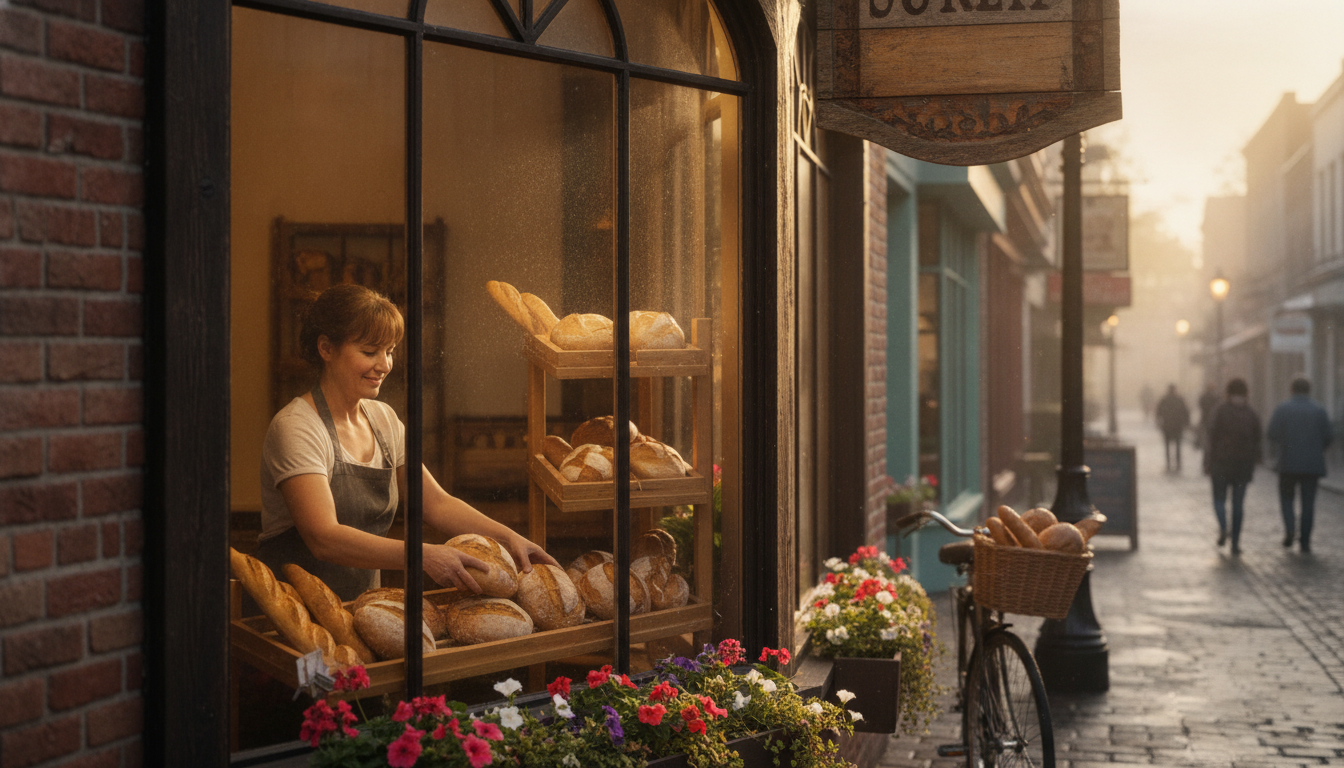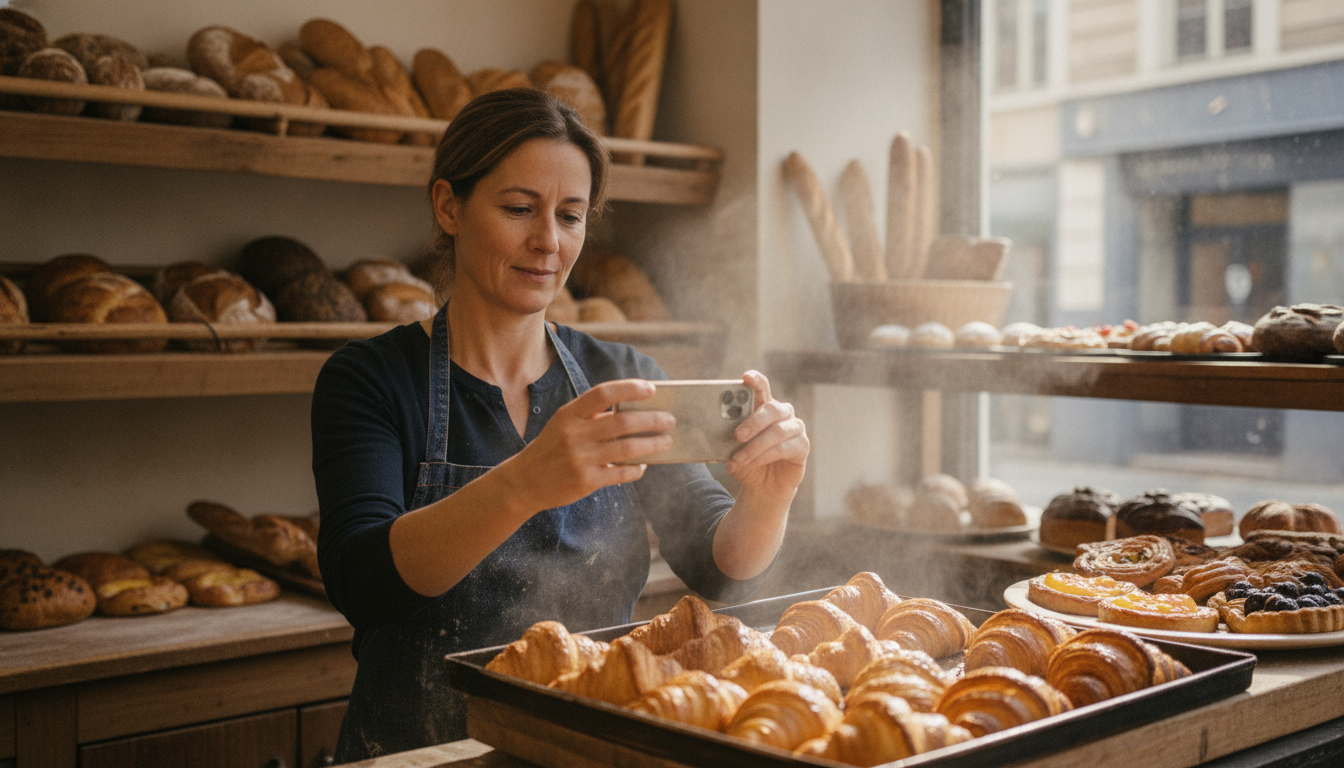
A bakery owner in Bristol ran a proper shoot last spring: a professional photographer, a styled flat-lay of pastries on marble, two hours of setup, and £800 out of the door. The resulting images sat in a Dropbox folder, trickled out over three weeks, and performed about as well as anything else on her feed. Then, on a Tuesday morning at 7am, she pulled out her phone and filmed a 12-second video of a croissant coming out of the oven - steam rising, butter glistening, tongs still warm. She posted it with one line of caption. It reached four times her follower count and drove a queue she had not seen since Christmas. The professional photos were beautiful. The phone video was useful. Those are not the same thing.
Why Polished Content Underperforms for Physical Local Businesses
The assumption most local owners carry is that production quality equals marketing quality. It does not - at least not for the specific job local content needs to do. A national brand's Instagram exists to build aspiration and brand memory at scale. Your Instagram exists to answer one question for a specific person in a specific place: 'Is this worth going to right now?' Those are fundamentally different briefs, and they require fundamentally different content. A styled flat-lay answers the aspiration question beautifully. A steaming croissant at 7am answers the proximity and immediacy question - the one that actually moves feet through your door.
The algorithm and the customer are reading the same signal: is this real, is it now, and is it near me? Polished content fails all three tests simultaneously.
The Three Signals That Local Content Must Send
Local content that consistently drives walk-ins and bookings is doing three specific things at once. Most business owners are only doing one - if they are doing any at all.
- Recency: Content posted today signals you are open, active, and worth visiting this week. Platforms surface recent, engaged content to local audiences far more aggressively than polished posts from three weeks ago. A photo from your shoot last month tells the algorithm nothing useful about this morning.
- Specificity: 'Fresh croissants available' performs worse than 'The almond ones are out of the oven right now and we only make 24.' Specificity creates scarcity, signals authenticity, and gives a reason to act today rather than 'sometime soon.'
- Locality: Content that mentions your street, your neighbourhood, a local event, or a local supplier outperforms generic content because it signals to both the platform and the viewer that this is for them, specifically. It is the difference between a billboard and a handwritten note on a neighbour's door.
The 15-Minute Weekly Capture Habit
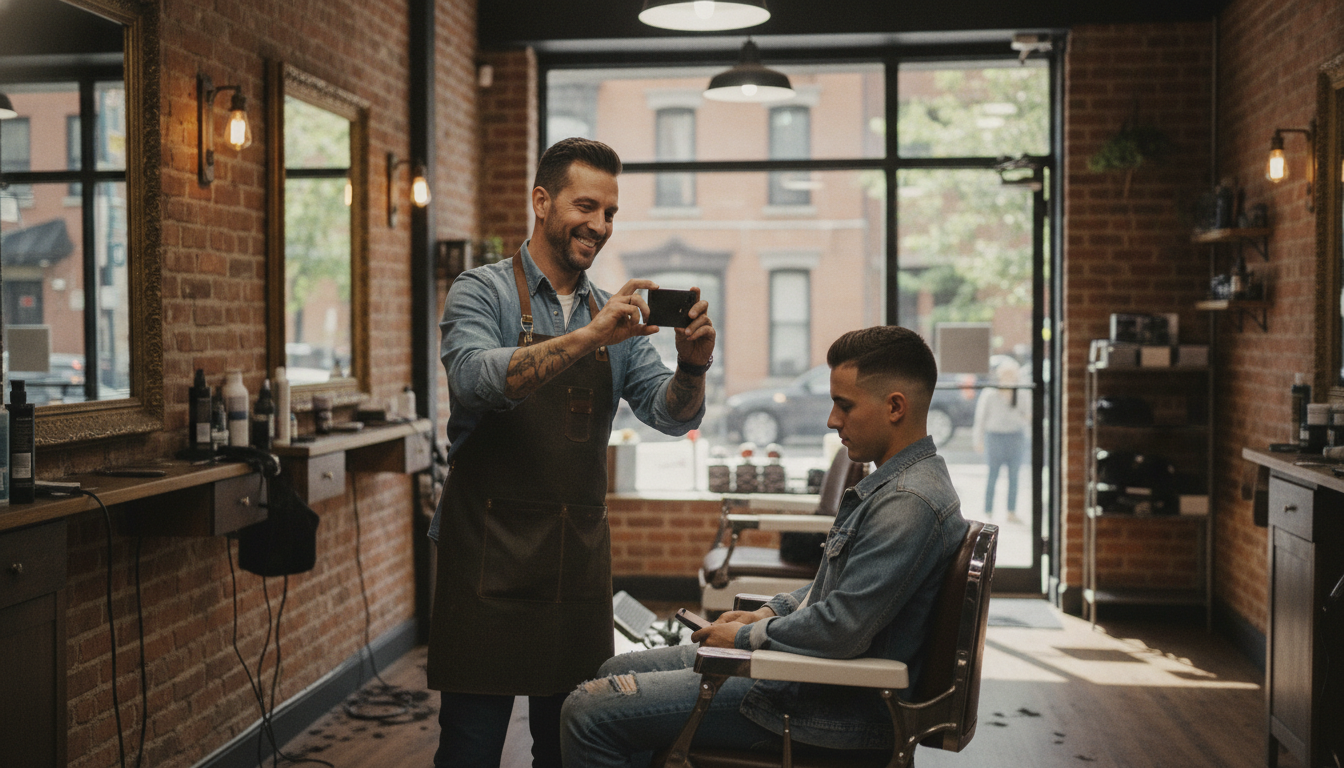
The reason most local owners do not post content like the Bristol bakery's croissant video is not that they do not see the value. It is that content creation feels like a separate task that requires a separate time slot - and that time slot never arrives. The fix is not a content calendar. It is a capture habit: short, habitual, timed to moments that already exist in your working day.
- The open moment: Film or photograph the first 60 seconds of your business day - the oven coming on, the display case being filled, the sign being flipped. This is inherently real, timely, and specific. It takes 90 seconds.
- The best thing today: Once per day, before your busiest period, identify the single most interesting or photogenic thing currently in your business - a new product, a seasonal special, something just delivered - and shoot it in natural light with your phone. One take. No editing.
- The end-of-week moment: Friday afternoon, spend five minutes looking at what sold best that week and take one piece of that story - a customer reaction, a behind-the-scenes process shot, a before-and-after - and save it as a post or reel for the following Monday.
- Batch on Sundays (optional): If you want one weekly planning session, spend 10 minutes reviewing your captures from the week and scheduling two to three posts. That is the entire content operation.
The goal is not volume. It is consistency of signal - proving to the platform and your local audience, week after week, that you are present, active, and worth paying attention to.
Turning Raw Moments Into Ready Posts - Without a Creative Team

From Capture to Caption in Under Three Minutes
The gap between a good raw photo and a posted piece of content is not technical - it is creative. Most owners know what to photograph. They stall at the caption, the hook, the call to action. This is where Rulrr's AI Content Studio removes the bottleneck: you bring the raw moment - a photo, a product name, a sentence about what's fresh today - and it generates ready-to-post captions, local hooks, and platform-specific copy that sounds like you, not a marketing agency. The capture stays authentic. The output gets polished enough to work. You do not need a creative team. You need a system that turns your real moments into content without the blank-page paralysis that stops most owners from posting at all.
The broader principle here is worth naming plainly: the production gap between a professional shoot and an iPhone photo has essentially closed. The content gap - between generic and specific, between polished and real, between now and three weeks ago - has never been wider. The businesses winning local feeds right now are not the ones with the biggest budgets. They are the ones who have built a capture habit and stopped mistaking production quality for marketing quality. Your croissant coming out of the oven is worth more than a styled flat-lay. Post it before it cools.