You have customers who love you. They leave five-star reviews unprompted. They tell their partner about your food on the way home. They genuinely mean to mention you when a friend asks for a recommendation. And then the moment passes, the thought evaporates, and you get nothing. Not because the goodwill wasn't real - but because goodwill without a trigger is just warm air. The businesses that turn satisfied customers into a steady stream of new ones aren't luckier or more likeable than you. They've simply stopped leaving the referral moment to chance.
Why Strong Reviews Don't Automatically Produce Referrals
There's a widespread assumption that if your reviews are good, word-of-mouth will follow naturally. It's worth killing that assumption cleanly. Reviews and referrals are driven by different psychology. A review is a retrospective act - the customer is already home, the visit is processed, and they're giving a verdict. A referral is a social act - it requires the right moment in a conversation, a specific thing to say, and a reason to say it now rather than later. All three of those need to exist simultaneously. Most local businesses engineer none of them.
Satisfied customers refer when two things align: they feel the timing is right and they have something concrete to pass on. Most businesses leave both entirely to chance.
The Two Things That Actually Trigger a Referral
Referral behaviour isn't random. When you study the moments customers actually mention a local business to someone else, two conditions are almost always present. First, something brought the business back to the top of their mind - a message, a return visit, a friend mentioning a related need. Second, they had something specific and low-friction to pass on: a name, a deal, an offer for the friend, a reason that made it worth saying out loud. Remove either condition and the referral dies before it starts. Your job isn't to hope both align spontaneously. It's to engineer them.
- The peak satisfaction window sits between 24 and 72 hours after a visit - this is when recall is sharpest and emotional warmth is highest. Most businesses send nothing during this window.
- A referral prompt without a concrete offer gives a customer nothing to pass on. 'Tell your friends about us' is not a mechanism - 'Here's a free coffee for the friend you bring in' is.
- The friend offer outperforms the referrer reward almost every time. People refer to look generous to someone they care about, not to pocket a discount for themselves.
- Specificity increases shareability. 'Bring a friend this week' beats 'refer anytime' because urgency collapses the gap between intention and action.
- The channel matters. A WhatsApp-ready message or a short link beats a printed card in a bag. Meet customers where they actually share things.
Building the Prompt: What to Send, When, and What to Include
A referral prompt isn't a campaign - it's a single, well-timed message that does three things: reminds the customer how good the experience was, gives them something tangible to share, and makes sharing easy. Here is the structure that works across restaurants, salons, retail shops, and service businesses alike.
The Three-Part Referral Message
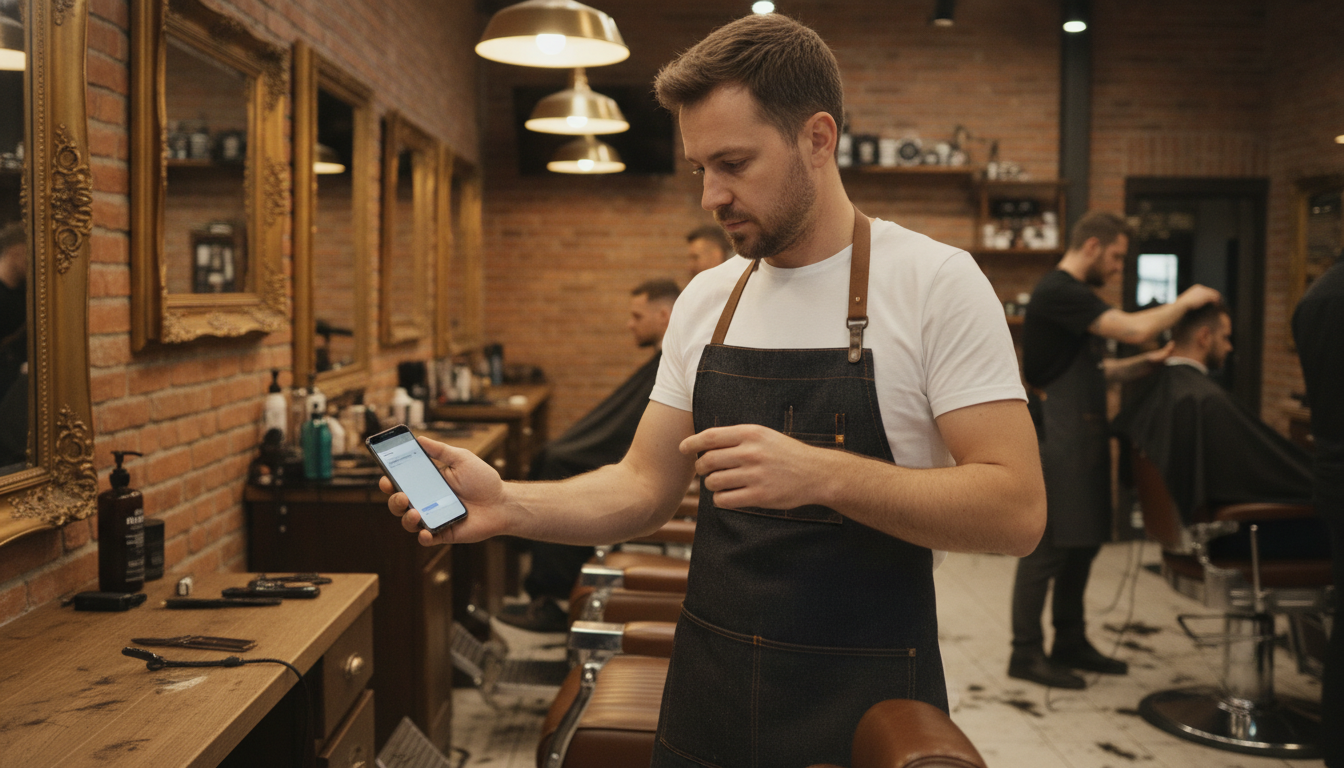
Part one is a brief, genuine callback to the visit: 'Hope you're enjoying the cut.' One sentence. No corporate tone. Part two is the offer - specific, low-friction, and framed as a gift for the friend rather than a reward for the customer: 'Bring someone new in before Friday and their first cut is on us.' Part three is the share mechanism: a short link, a code, or simply 'just show this message at the door.' The whole thing fits in an SMS or a WhatsApp message. It takes under a minute to write once, and a good system - like what Rulrr builds around your visit data - can send it automatically at the right point in the post-visit window without you thinking about it again.
The Offers That Convert - and the Ones That Don't
Not all referral incentives are equal, and the wrong one can actually undermine the behaviour you're trying to build. The goal is to create a low-risk reason for a new customer to walk through the door, not to train your existing customers to hold out for rewards every time they visit.
- Free item for the friend (not a discount): 'Your friend gets a free starter' works better than '10% off for both of you.' Free feels like a gift; percentage discounts feel transactional.
- Upgrade, not markdown: Offering a free upgrade - a larger portion, a complimentary add-on, a priority slot - protects your margin while still feeling generous.
- Time-bound to this week: Open-ended offers create zero urgency. A window of five to seven days forces the customer to either act now or forget about it.
- Easy to explain in one sentence: If your customer can't describe the offer to their friend in ten seconds, it won't survive the conversation. Strip it down.
- Works for one new person, not a group: Referrals work because they're personal. 'Bring a friend' is a social act. 'Bring whoever' is a flyer.

The System That Makes This Run Without You
The obstacle most local business owners hit isn't knowing what to send - it's the discipline of sending it consistently at the right moment, for every customer, every week, without it slipping. A referral prompt sent three days after a visit is a warm nudge. The same message sent three weeks later is irrelevant. Timing is the mechanism. That's exactly where Rulrr comes in: by connecting your customer visit data and post-visit window to automated, personalised prompts, it takes the execution entirely off your plate. You set the message and the offer once. The system handles the timing, the send, and the consistency - whether you serve twenty customers a week or two hundred.
Your next ten customers almost certainly contain three or four people who would happily refer a friend if you gave them the right moment and something concrete to pass on. The referral revenue is already in your customer base. It's just sitting there, waiting for a nudge that never comes. Send the nudge.