Pull up your last 90 days of sales data and find your top 20% of customers by visit count. Now ask yourself: what would your monthly revenue look like if each of those people came in just one extra time? Not twice as often. Once more. For most local businesses, that single additional visit per regular outweighs the margin contribution of acquiring 50 new customers from scratch. Yet the average owner spends the majority of their marketing budget pointing outward - chasing strangers - while the people most likely to spend money with them this week already have their phone in their pocket and a reason to return. The visit-frequency lever is the most underleveraged growth dial in local business. Here is exactly how to find your ceiling and what actually triggers the extra visit.
The Maths Nobody Shows You at the Start
Acquiring a new customer for a local business typically costs between 5x and 7x more than retaining an existing one, once you account for ad spend, offer discounts, and the lower average basket that new visitors bring before trust is established. But the frequency argument is even sharper than the retention argument. A regular who currently visits 2.3 times a month and moves to 3.3 visits represents a 43% revenue uplift from that single customer - at near-zero acquisition cost and with a basket size that is already proven. Compare that to 50 new customers: most will visit once, a meaningful percentage will never return, and their average first-visit spend will likely be lower than your regulars' standard order. The maths overwhelmingly favours depth over breadth, yet almost no local marketing budget reflects this.
The most valuable customer you will ever acquire is the one already sitting at your table. The question is whether you have a system that earns the next visit - or whether you are leaving that to chance.
Finding Your Frequency Ceiling
Every business has a natural visit ceiling - the point at which a customer's category need is fully satisfied and additional visits would require a behaviour change, not just a reminder. A hair salon might have a ceiling of once every four weeks. A lunch spot might have one of three times a week. A yoga studio might sit at five sessions a week for its most committed members. Before you try to move frequency, you need to know where your ceiling actually sits - because the gap between your current average and that ceiling is your real addressable opportunity.
- Segment your customer base into three tiers: top 20% by visit count, middle 60%, and bottom 20%. Your top tier is close to ceiling - focus retention, not frequency growth, here. Your middle tier is the highest-leverage group for visit frequency campaigns.
- Calculate the average days between visits for your middle tier. This is your baseline return window. Any marketing trigger that fires just before this window closes has the highest chance of pulling forward the next visit.
- Identify your category ceiling by looking at your single most frequent customer. Their visit pattern is a rough upper bound on what a highly engaged customer will naturally do without extraordinary intervention.
- Calculate the revenue delta: if your middle-tier customers closed 50% of the gap between their current frequency and your top tier's frequency, what does that add to monthly revenue? This number is your campaign target - make it concrete before you start.
What Actually Triggers the Extra Visit Within 10 Days
The 10-day window is not arbitrary. For most local businesses with a natural return cycle of 2-4 weeks, a trigger that fires between days 7 and 10 after the last visit lands before the customer has mentally 'moved on' to a competitor and while the memory of the last positive experience is still fresh. Beyond day 14, reactivation cost climbs sharply. What actually moves behaviour in that window is a combination of three things: relevance, specificity, and a reason now.
- Relevance - the message needs to connect to something the customer actually bought or did on their last visit, not a generic 'we miss you' broadcast. A customer who ordered the seasonal risotto responds to a message about the new spring menu, not a blanket discount.
- Specificity - a time-bound reason to act. 'This week only' outperforms 'come back anytime' by a significant margin, not because customers are discount-hunters but because specificity removes the mental friction of an open-ended decision.
- A reason now that is additive, not reductive - this means a new menu item, a limited product drop, an event, or a loyalty milestone ('you are two visits from your next reward'), not a price cut. Price cuts train your best customers to wait for the next one.
- Channel matters: SMS and WhatsApp outperform email for local businesses in the 7-10 day trigger window, with open rates three to four times higher. Email works well for longer-cycle businesses like spas, clinics, or furniture stores where the return window is measured in months.
How to Surface the Timing Automatically Instead of Guessing
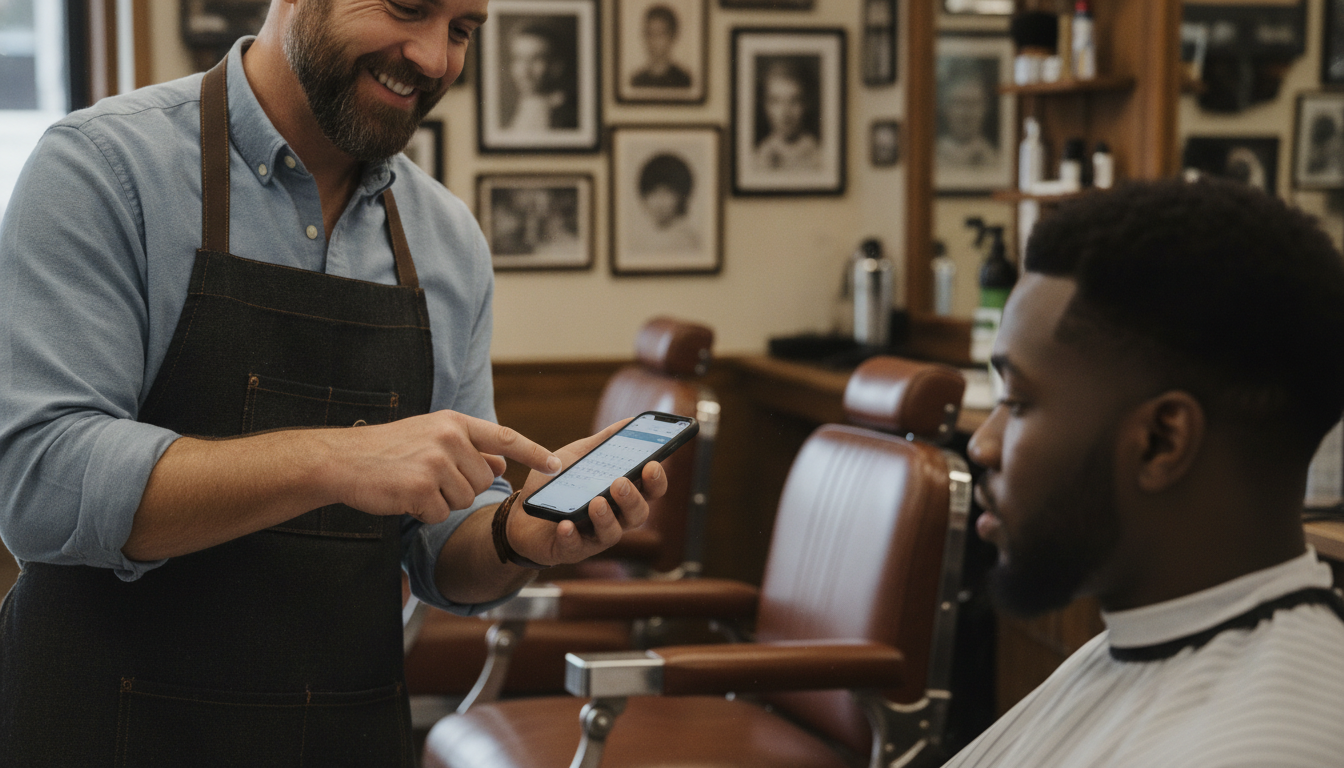
The manual version of this - exporting your POS data, sorting by last visit date, calculating return windows per customer segment, and then manually firing the right message at the right time - is genuinely useful but practically unsustainable for an owner running a business. The owners who actually execute this consistently are the ones who have connected their transaction history to a system that watches the gaps automatically. Rulrr reads your POS data to identify which customers are approaching or have just passed their normal return window, and surfaces that timing as a campaign trigger - so the right message goes out to the right segment without you having to remember to check a spreadsheet at 7am on a Tuesday. The insight is not new; the friction of acting on it at the right moment is what most owners never solve.

The Three Segments Worth Treating Differently
Not every regular deserves the same frequency nudge. Your top 20% are already visiting close to their natural ceiling - pushing harder risks annoying your most loyal customers. The right move here is deepening the basket (upsells, bundles, add-ons) rather than increasing visits. Your middle 60% are your true frequency-growth opportunity: they like you, they return, but they have not formed the habit of coming back at maximum cadence. A well-timed trigger campaign aimed at this segment is where most of your frequency revenue will come from. Your bottom 20% are worth a reactivation message if they have visited in the last 90 days, but investing heavily in frequency campaigns for low-engagement customers before you have maximised the middle tier is a misallocation of effort.
The Practical Starting Point for This Week
You do not need a complex system to start. Pull your last 60 days of transactions. Find every customer who visited between 15 and 25 days ago and has a history of at least two prior visits. That is your first frequency trigger list. Write one message - specific to something they bought or experienced, with a reason to act this week, no discount required. Send it via SMS or WhatsApp if you have those contact details, email if not. Track how many of those customers visit within the following 10 days versus a control group you did not message. That single experiment will tell you more about your frequency lever than six months of instinct. Once you have proved the return, the next step is making that trigger automatic rather than a monthly manual exercise - which is where the compounding effect kicks in.
The extra visit is almost never about the offer. It is about the timing of the reminder arriving in the exact window when the customer was already half-thinking about coming back.
The businesses compounding revenue fastest right now are not the ones with the biggest acquisition budgets. They are the ones who have quietly built a system that earns the next visit from the customers they already have - at the right moment, with the right message, without the owner having to remember to send it. That is not a big-brand advantage. It is a process advantage, and it is available to any local business willing to look at their transaction history differently.