A restaurant three streets away from you has 800 followers. You have 8,000. They are booked out on Thursday nights. You are not. This is not a coincidence or a fluke - it is the natural result of confusing reach with relevance. For local businesses, the number that matters is not how many people see your content. It is how many people within walking or driving distance of your front door see it, feel spoken to by it, and take a next step. The gap between a big following and a busy shop almost always comes down to three fixable things: where your content is distributed, when your offers land, and whether every post tells someone exactly what to do next.
Why the Algorithm Does Not Owe You Foot Traffic
Most local owners treat social media like a billboard on a motorway - post something, hope people drive past, hope some of them stop. But Instagram, Facebook, and TikTok are not motorways. They are personalisation engines that reward relevance signals, not volume. When a business in Edinburgh posts a generic flat-lay of its menu with a motivational caption, the algorithm has almost no signal to determine who should see it. When a barbershop in Leith posts a short clip of a fresh fade with the caption 'Book before Friday - two slots left this week, link in bio' and boosts it to men aged 22-45 within 3km, the algorithm has everything it needs. Specificity is not just good copywriting. It is the fuel the distribution engine runs on.
The businesses winning on social are not the ones with the largest audience. They are the ones with the most relevant audience - and relevance is almost always a function of geography and timing, not polish.
The Three Levers That Actually Convert Attention Into Visits
Strip away every marketing trend and you are left with three mechanics that determine whether an online viewer becomes an in-person customer. Miss any one of them and the chain breaks.
- Geo-targeted distribution: Your content needs to reach people who can physically act on it. A promoted post without a tight radius filter is spending money on people who will never cross your threshold. Tighten your geo to 3-8km for urban locations, slightly wider for rural or destination businesses, and watch your cost-per-visit drop sharply.
- Offer timing: Posting a Thursday lunch special on a Tuesday morning is waste. Posting it Wednesday evening - when people are already thinking about the next day - is leverage. Map your posts to the decision window, not the creation window. The moment someone is thinking about where to eat, get a haircut, or pick up a gift is the only moment that matters.
- A clear next step in every post: 'Link in bio' is not a call to action. 'Book your spot before Friday - only four tables left this week' is. Every post your business publishes should have one single, frictionless instruction: book, call, visit, claim. Remove the step where someone has to decide what to do next - make that decision for them.
- Hyper-local language and specificity: Mention the street, the neighbourhood, the local event happening this weekend. National brands cannot say 'perfect for after the farmers market on Broad Street this Saturday' - you can. Specificity is credibility, and credibility is what converts a scroll into a visit.
- Consistency over volume: Three well-targeted, locally specific posts per week with a clear offer and a next step will outperform seven generic posts every single time. The businesses with 800 followers winning on foot traffic are almost always posting less - but landing every post with precision.
What 'Conversion-First' Content Actually Looks Like in Practice
The difference is in the detail, not the design
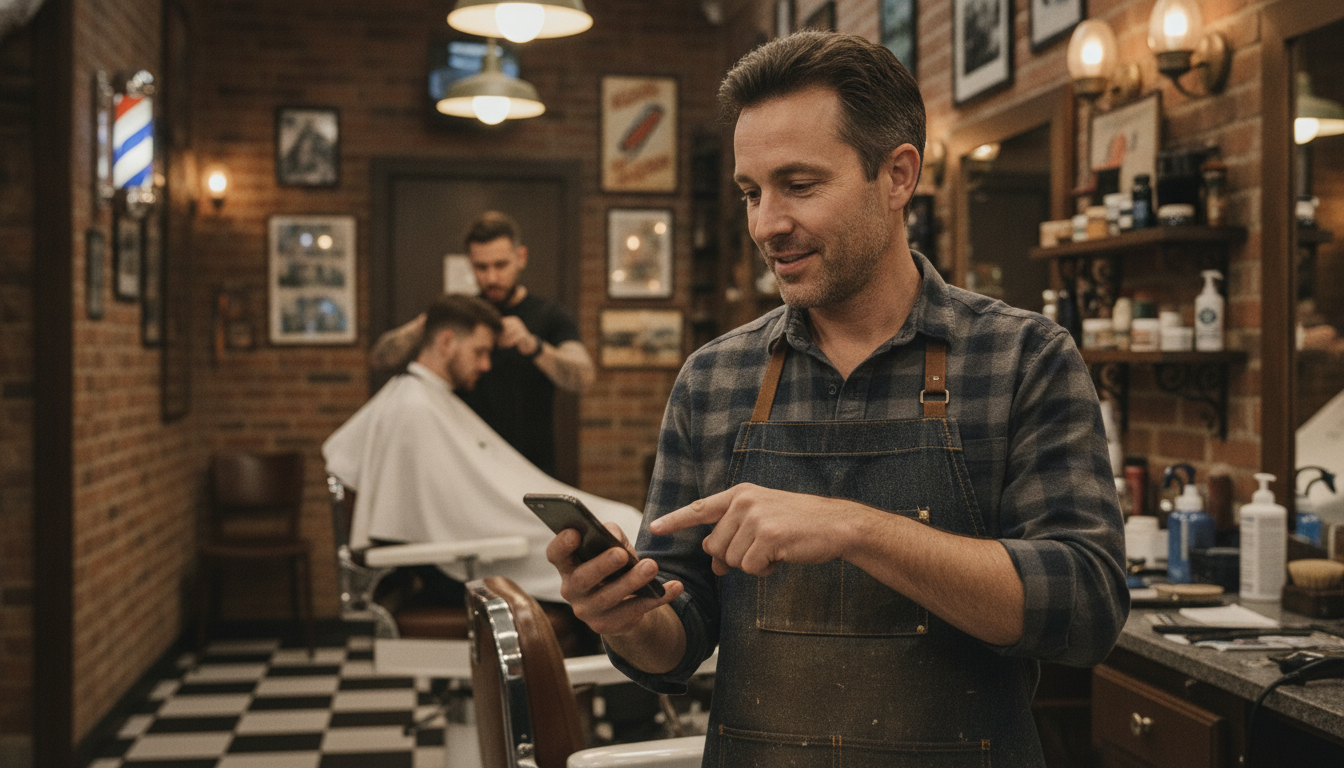
A post does not need to be beautifully designed to drive bookings. It needs to answer three questions in under three seconds: Is this for me? Is this near me? What do I do right now? A barbershop in Chicago posting 'Fresh cuts, Wicker Park, three slots open Saturday morning - DM us to grab one' will fill those slots. The same shop posting a glossy brand graphic with its logo will look impressive and sell nothing. The format, the caption length, the aesthetics - all secondary. The geography, the timing, and the next step are primary.
How to Audit Your Own Content in 20 Minutes
Pull your last ten posts. For each one, ask these three questions: Does this explicitly mention or target my immediate area? Does this include a specific offer or reason to visit this week? Does this end with one clear instruction? If fewer than six of the ten pass all three tests, you have found exactly why your reach is not becoming foot traffic. The fix is not to post more. It is to rebuild the template with these three filters baked in before anything goes live.

Where Rulrr Fits Into This
The reason most local businesses never fix this gap is not that they disagree with the logic - it is that rebuilding every post from scratch with geo-targeting, timing strategy, and a conversion hook is genuinely time-consuming when you are also running a business. Rulrr's campaign engine is built around exactly this conversion chain: it connects your offer, your location radius, your timing, and your call to action into a single workflow so that what gets posted is already optimised for foot traffic before it goes anywhere near a feed. It does not help you grow a following for its own sake. It helps you make the audience you already have - however small - actually walk through the door.
The businesses with 800 followers outperforming yours are not lucky or more creative. They are simply doing fewer things better - and targeting every one of them at the person standing two streets away who is already looking for exactly what they sell. That is a process, not a talent. And processes can be built.