You already know when your dead window is. Tuesday at 3pm. Sunday morning. The last forty minutes before close. It arrives on schedule every single week, and right now you are either watching it bleed margin or you are reflexively knocking 20% off something to fill a few seats. Neither is a strategy. The problem with the discount move is not that it fails - it often works in the short term. The problem is what it teaches. Customers who learn your slow slot is discount time will wait for it. You have not filled a gap; you have trained a behaviour that makes the gap permanent. There is a smarter play, and it starts with data you already have.
The Pattern Is Already in Your Till - You Just Have Not Read It Yet
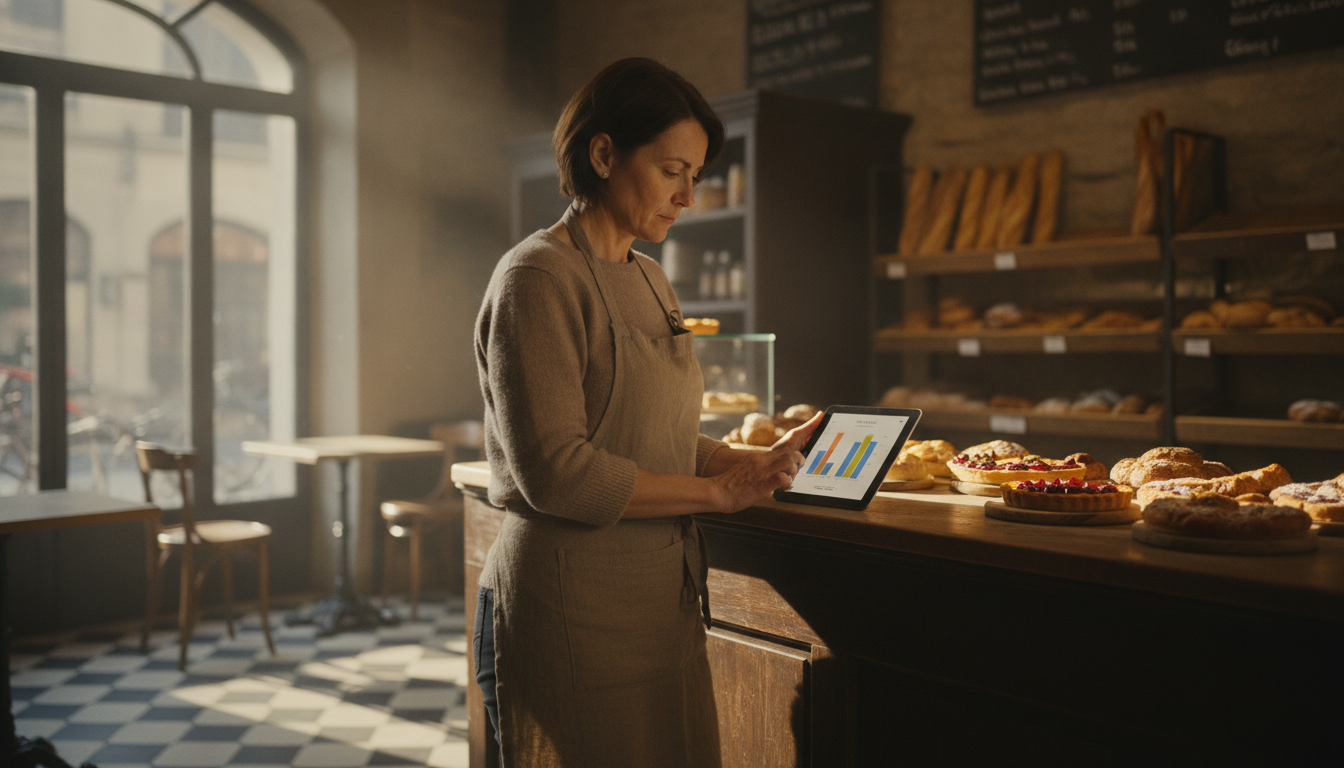
Your transaction history is not just an accounting record. It is a behavioural map of your customer base. Look back six months and you will find something consistent: the same hours underperform in the same rhythm, week after week. But look closer, and you will also find a second pattern - the customers who did visit during that window. Who are they? What did they buy? When did they come back? That cohort is your starting point, because they are living proof that your quietest hour does have an audience. It is just not being reached at the right moment, with the right message.
Three Questions Your Sales Data Can Answer Right Now
- Which specific 60-90 minute window consistently shows your lowest transaction volume, across at least three of the last eight weeks?
- What is the average basket value during that window compared to your peak hours - and is the gap in volume, spend per head, or both?
- Which returning customers have visited during that window more than once? These are your 'slow-slot regulars' - an audience that already chose you at an inconvenient time.
Once you have answered those three questions, you have something far more useful than a hunch. You have a defined problem window, a measurable revenue gap, and a seed audience to build from. Most owners never get this specific. They know Tuesday is quiet. They do not know it is consistently quiet between 2:30pm and 4pm, that basket size is actually fine but footfall drops by 60%, and that eleven of their loyalty customers have visited in that window in the past two months. Specificity is what separates a campaign that works from one that just gets posted.
Build an Audience Before You Build a Campaign
The instinct when a time slot is empty is to shout louder at everyone. Run a post. Boost it broadly. Hope for footfall. This approach is both expensive and untargeted. The better move is to identify who is most likely to come during your dead window, and reach them specifically. Think about your existing customers in three groups: those who have visited during that window before (highest probability of returning if prompted), those who typically visit at a similar time of day on a different day (schedulable and convenience-driven), and lapsed customers who used to come regularly but have dropped off in the past 60-90 days. That third group is particularly valuable - a slow-slot campaign gives you a reason to re-engage them with something other than a generic 'we miss you' message.
The goal is not to fill seats cheaply. The goal is to fill them with the right people, at the right moment, with a message worth responding to. That is a targeting problem, not a pricing problem.
What a Value-Led Campaign Actually Looks Like (Without a Price Cut in Sight)
Value-led does not mean expensive. It means the offer centres on experience, access, or convenience rather than a reduced price. Here are four formats that consistently outperform the discount approach for slow-slot campaigns:
- The 'no-queue' angle: 'Tuesday afternoons are our quietest - walk in, skip the wait, and take your time.' This frames the slow period as a feature, not a sign of unpopularity.
- The exclusive add-on: For salons, spas, or food businesses, offer something small and complementary during the slow window - a free scalp massage with a cut, a small side with a coffee order - without touching the headline price.
- The early-access or priority frame: 'Reserve your spot for Tuesday afternoon - we only take four bookings in that window.' Scarcity and exclusivity do more for perceived value than a 20% reduction ever will.
- The community hook: Partner with a neighbouring business to cross-promote the window - a gym that closes at 2pm sending clients to your juice bar, a bookshop directing its afternoon regulars to your cafe next door.
- The re-engagement reason: For lapsed customers, the dead window gives you a specific, low-pressure hook: 'We have a quieter moment on Tuesday afternoons and thought of you - no rush, no crowd, come as you are.'

Timing the Campaign to the Window - Not the Algorithm
Most boosted posts go live when the owner has five minutes, which is usually the morning rush or late at night. Neither timing is useful for a 3pm footfall problem. Your campaign needs to land in the two-to-four hours before the window opens - when the decision to 'pop in somewhere this afternoon' is still forming. For a Tuesday 3pm slot, that means messaging needs to reach people by 11am Tuesday at the latest, ideally the evening before when they are planning their next day. Platforms like Rulrr connect your POS patterns to campaign scheduling so the trigger is the data itself - when your slow window is approaching, the campaign is already timed to reach the right audience at the right moment, without you manually setting it every week.
Measure the Gap, Not Just the Footfall
After running your first slow-slot campaign, the metric most owners check is footfall - did more people come in? That is worth tracking, but it is only half the picture. The second number that matters is whether the customers who came during that window returned outside of it. If your Tuesday 3pm campaign is only generating Tuesday 3pm customers, you have filled a slot but not grown your business. The real win is when a customer who had no prior pattern with your business tries you during your quiet hour and becomes a regular at a more profitable time. Track return visit patterns for every customer acquired through a slow-slot campaign over the following 60 days. That is where the real ROI lives.
The dead hour in your business is not a failure of demand - it is a failure of timing and targeting. Your POS already holds the evidence you need to build a campaign that reaches the right people with the right message before the window opens. No discount required. No margin sacrificed. Just a sharper read of the data you already own, and a campaign structure disciplined enough to act on it before the slow slot arrives - instead of reacting to it once it does.