Every week you spend hours crafting Instagram posts that reach maybe 4% of your followers, running ads to cold audiences who have never heard of you, and chasing the algorithm's latest preference. Meanwhile, there is a channel sitting right on your front counter - or baked into every transaction at your till - that costs nothing to own, reaches 100% of the people you send to, and compounds in value every single month. Your customer contact list. Most local owners either never build it systematically, or they build it once and let it go cold. Both are expensive mistakes. Here is the math, the capture moments, and the simple sequence that turns a static list into a genuine revenue engine.
Why 200 Contacts Beat 5,000 Followers - The Compounding Math
Organic social reach for a local business page currently sits between 2% and 6% on most platforms. That means your 5,000 followers see roughly 100 to 300 of your posts on any given day - and those are passive impressions, not clicks or bookings. A permission-based email list, by contrast, delivers an average open rate of 35-45% for local businesses sending relevant, well-timed messages. SMS sits even higher, with open rates above 90% within three minutes of sending. Run that comparison honestly: 200 email contacts who opted in because they already bought from you will generate more direct revenue responses per send than the entire follower count of an average local business page. The difference is not reach - it is permission and intent. These are people who handed over their contact details because they like what you do. That is a fundamentally different relationship than an algorithm-served impression.
Social media is a billboard on someone else's motorway. Your contact list is the phone in your customer's pocket - and you own it outright.
Three Capture Moments Already Built Into Your Customer Flow
You do not need a lead magnet, a landing page, or a complicated tech stack to build a list. Every local business already has three natural moments where customers are primed to say yes - most owners just never make the ask.
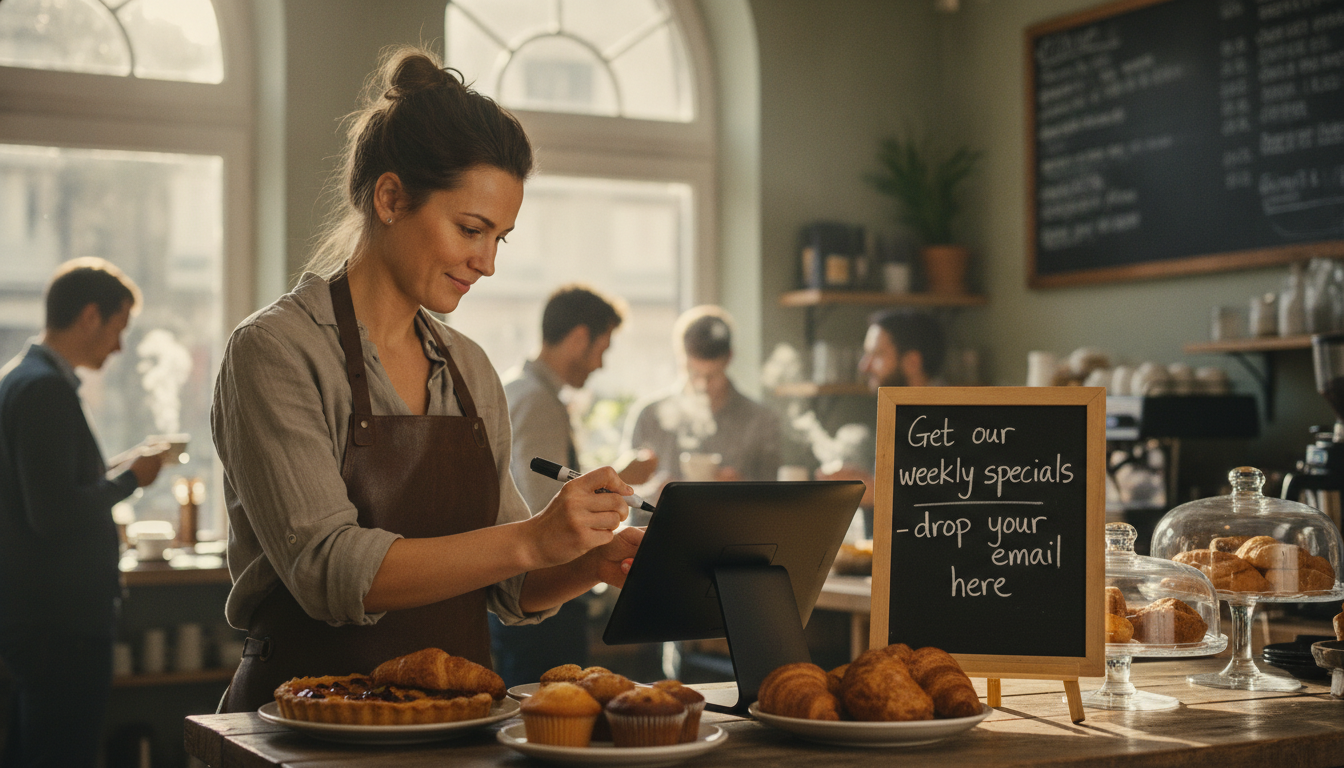
- At the point of sale - When a customer pays, they are in peak satisfaction mode. A simple tablet prompt, a small card beside the reader, or a POS-integrated opt-in field asking for an email for their receipt or a loyalty update captures the moment without friction. If your system already collects emails for digital receipts, you are sitting on a list you have never used.
- At the booking or reservation step - Anyone who books a table, a haircut, a class, or a consultation is already committing their time. Adding an SMS reminder opt-in at this exact moment is a natural extension of the service. They want the reminder. You want the number. Everyone wins.
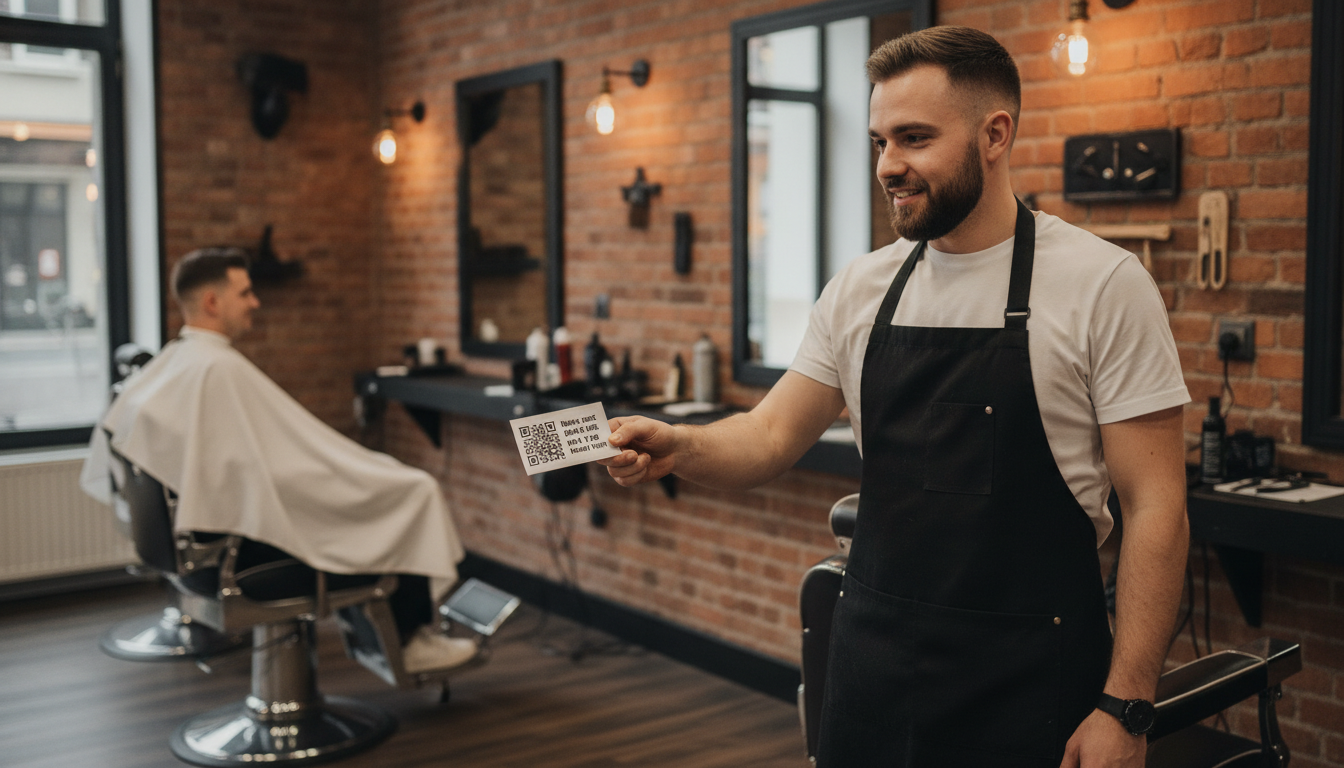
- At the follow-up window - The 24 to 48 hours after a first visit is the highest-intent window in the customer lifecycle. A QR code on a receipt, a packaging insert, or a thank-you card pointing to a simple sign-up page with a small reward - first refill free, 10% off next visit - converts at rates that would make any paid ad blush.
The Three-Message Sequence That Turns a Cold List Into Repeat Revenue
Capturing the contact is only half the equation. Most lists go cold because owners collect names and then do nothing for six weeks, by which point the customer has forgotten they signed up. A simple three-message nurture sequence, set up once and running automatically, prevents that drop-off entirely.
- Message 1 - Within 24 hours of sign-up: A short, warm welcome that confirms what they will receive (special offers, early access, weekly specials - whatever you promised) and delivers the incentive if you offered one. Keep it personal and specific to your business. No corporate language.
- Message 2 - Day 7: A genuinely useful message - a recommendation, a behind-the-scenes note, a staff pick, a seasonal heads-up. Not a discount. The goal here is to establish that your messages are worth opening, not to train them to wait for a deal.
- Message 3 - Day 21 to 30: A soft re-engagement prompt - a booking link, a new menu item, an event invite, or a limited offer tied to a real reason. By this point, a customer who opens all three is a loyal contact. One who goes quiet here is a reactivation candidate, not a lost cause.
The power is in the automation. This sequence needs to be written once, loaded into your email or SMS tool, and it runs for every new contact indefinitely. Platforms like Rulrr connect these follow-up workflows directly to your campaign setup, so the sequence fires without a manual trigger every time a new contact enters the system - the kind of compounding output that no amount of daily posting can replicate.
Keeping the List Alive: The Weekly Habit That Takes 20 Minutes

One Email a Week Is Enough - If It Is the Right One
You do not need a newsletter. You need one useful, relevant message per week that gives your customers a genuine reason to visit, book, or buy. The format that works best for local businesses is simple: one piece of news (new product, new team member, seasonal change), one specific offer or event, and one clear call to action with a link or phone number. That is it. Written in your own voice, from the perspective of someone who knows the neighbourhood, it takes 20 minutes and it will outperform any amount of generic social content. The key is consistency - a list that receives one solid message a week stays warm and responsive. A list that hears from you once a month forgets you exist.
The List Is an Asset - Treat It Like One
If you sold your business tomorrow, your social followers would stay with the platform. Your Google reviews would stay with the listing. Your customer contact list - every opted-in email address and phone number - goes with you. It is the only marketing asset you genuinely own, and its value compounds every single month you keep adding to it and keep it warm. Start with whatever you have today. Load your existing email addresses from receipts, bookings, and reservations into a single list. Set up one capture moment at the counter this week. Write three follow-up messages and schedule them. Then send one useful email next Monday. That is the whole system. Two hundred customers receiving consistent, relevant messages from a business they already trust will generate more bookings, more repeat visits, and more word-of-mouth than any algorithm will ever deliver for free.