
Somewhere in your Google account right now is a listing that gets more purchase-intent traffic than your Instagram, your Facebook page, and possibly your own website combined. People searching 'hair salon near me open now' or 'best butcher in [your city]' are not browsing - they are deciding. Google Business Profile sits directly in that moment. And yet, most profiles for independent local businesses haven't been touched in three to six months: the hours are wrong, the photos are from a different era, the posts have expired, and the unanswered questions are quietly nudging buyers toward someone else. No ad budget fixes that. A consistent, structured 15 minutes a week does.
Why Your Google Business Profile Is Already Your Highest-Intent Channel
When someone types a search with local intent - 'Italian restaurant open Saturday', 'yoga studio near Shoreditch', 'emergency dental clinic Chicago' - Google surfaces a Local Pack before organic results and often before paid ads. That pack pulls directly from Business Profile data: your photos, your posts, your review responses, your Q&A section, your updated hours. Google indexes changes to your profile in near real time. A post you publish on a Tuesday afternoon can appear in search results by Wednesday morning. This is fundamentally different from SEO, which takes months to compound, and paid ads, which stop the moment your budget does. The profile rewards fresh signals consistently and immediately - and almost nobody is taking advantage of that.
Businesses that post to their Google Business Profile at least once a week see roughly 5x more views than those that post infrequently, according to Google's own internal data shared with business advisors.
The 15-Minute Weekly Action Plan (Pick One, Do It Every Week)
The reason most profiles go stale is not neglect - it is the absence of a system. Owners update their profile when something changes, which means they update it never. The fix is a single recurring weekly task built around four rotating action types. You do not need to do all four every week. You do need to do one of them, every single week, without fail.
- Week 1 - Post a 'What's On' or offer update: Use Google's native post feature to publish a short, specific update. A dish of the week, an upcoming event, a limited service slot, a new product line. Keep it under 150 words and include a clear call to action: 'Book now', 'Call to reserve', 'Come in this weekend'. Posts expire after seven days, which is exactly why weekly posting keeps your profile visually fresh in the Local Pack.
- Week 2 - Add three to five new photos: Google's own guidance confirms that profiles with fresh, recent photos receive significantly more direction requests and clicks. Skip the polished stock aesthetic. Real photos of your space, your team, your product in context, or a customer interaction (with permission) outperform studio shots because they match what searchers are trying to verify. File names matter: rename photos with descriptive terms before uploading rather than leaving them as IMG_4892.jpg.
- Week 3 - Audit and answer your Q&A section: Most owners do not realise anyone can post a question on their profile - and anyone can answer it. That includes competitors and strangers. Go in, find unanswered questions, answer them with the precision and warmth of your best staff member. If there are no questions, seed your own: post the three questions customers ask most often at the counter, then answer them yourself. This content is indexed by Google and surfaces in search.
- Week 4 - Check and update your business attributes and hours: Seasonal hours, holiday closures, added services, changed phone numbers - every mismatch between your real-world operations and your profile is a lost customer. Attributes (outdoor seating, wheelchair accessible, LGBTQ+ friendly, accepts card payments) act as filters in search. The more accurately populated your attributes, the more likely you are to appear in filtered local searches from buyers who have already decided what they want.
The Photo Categories and Post Types That Actually Drive Calls
Not all content has the same effect on profile performance. Google categorises your photos internally and uses them as signals for different search intents. Understanding which categories to prioritise means your 15 minutes each week have a disproportionate return.
- Exterior photos: These are the highest-impact category for first-time visitors. A clear, recent exterior shot - ideally showing your signage in daylight - helps people recognise your location before they arrive and reduces the friction of the first visit.
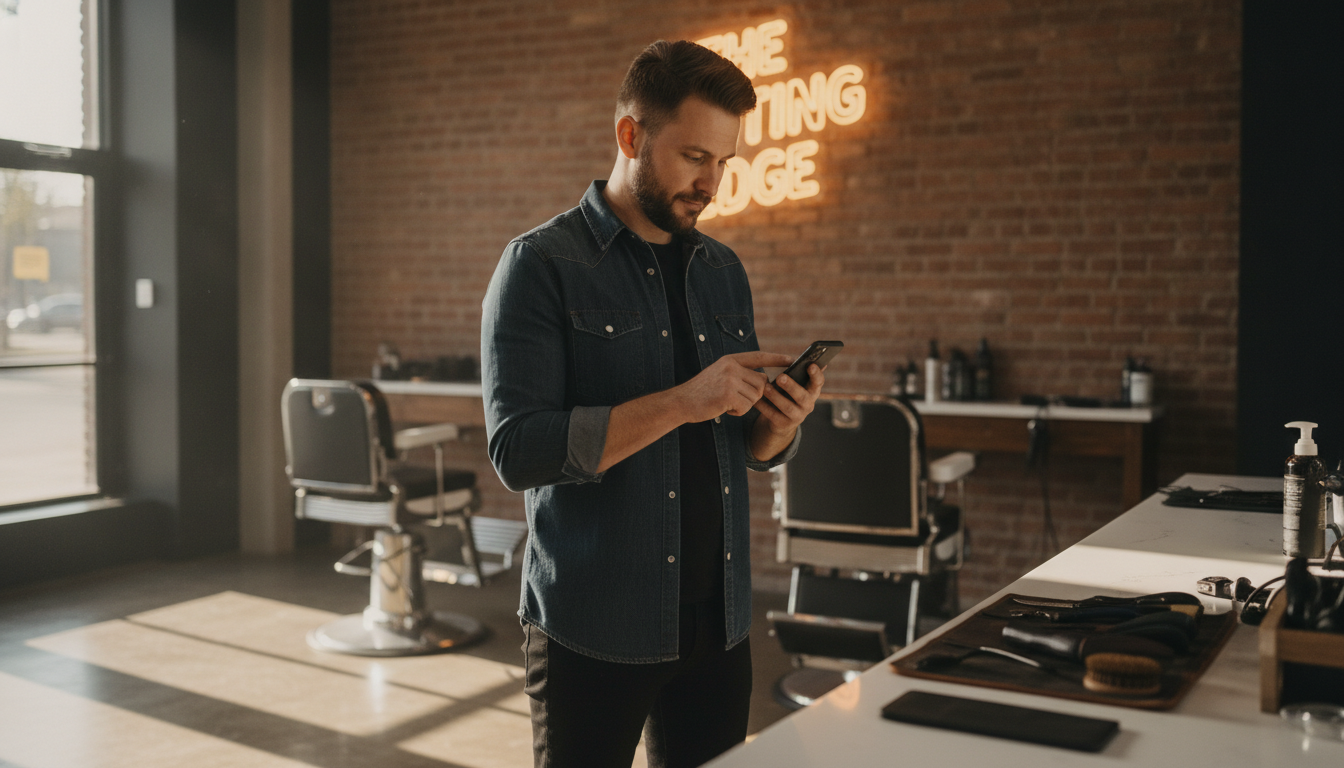
- Interior atmosphere photos: For restaurants, salons, gyms, and spas, interior shots that convey the real ambience of your space are what convert a searcher into a booking. Shoot during your busiest, most vibrant moment of day, not during setup.
- Product and menu photos: For food businesses, product photos on Google profiles directly influence order decisions. A photo of your signature dish or a bestselling item should be refreshed seasonally to stay visually relevant.
- Team photos: Google data shows that profiles featuring owner or staff photos build measurably more trust signals. A candid image of your team at work - not a posed corporate headshot - performs better at communicating approachability.
- Offer posts vs. update posts: Offer posts (which include a defined redemption period and optional promo code) tend to generate higher click-through rates than generic update posts. Use them for your strongest promotions. Use update posts for events, news, and seasonal announcements that build familiarity over time.
Making It a System You Can Hand Off or Automate
The weekly cadence only works if it actually happens. The mistake most owners make is treating this as a personal task rather than a business process. The moment you are slammed on a Friday service and the weekly update slips, it starts slipping regularly. There are two ways to protect the system: delegation and automation. If you have a front-of-house team member, this is an easy task to assign with a simple monthly brief - four action types, one per week, with a photo uploaded from the floor and a post drafted from the week's specials board. If you are running a multi-location operation or simply prefer automation, tools like Rulrr can generate and schedule Google Business Profile posts from your existing content workflow, keeping your profile active without requiring manual weekly input. Either way, the profile should be treated as a marketing channel with a publishing schedule - not a form you filled in once when you opened.

The Businesses Winning Local Search Right Now Are Not Outspending You
They are out-maintaining you. A restaurant two streets from yours with a profile updated weekly, 40 recent photos, a Q&A section with eight answered questions, and a Google post published three days ago will consistently outrank your profile in the Local Pack - regardless of how much you spend on Meta ads or how strong your Instagram following is. The Local Pack is decided by relevance, distance, and prominence. Freshness of activity signals prominence directly. This is one of the few remaining marketing channels where consistency and attention genuinely beat budget. A bakery in Bristol, a nail salon in Chicago, a family-run grocery in Lyon - the playbook is identical and the barrier is only the habit of doing it.
Start This Week: The 15-Minute Profile Audit
Before you start your weekly rhythm, spend one session getting your profile to a solid baseline. Open your Google Business Profile dashboard and check five things: first, are your hours correct for this week, including any special or holiday hours? Second, do you have more than 20 photos uploaded, with at least five added in the last 90 days? Third, is your business description under 750 characters and does it include the specific service terms a nearby customer would actually search? Fourth, are there any unanswered questions in the Q&A tab? Fifth, when did your last post go live? If it was more than two weeks ago, it has almost certainly expired from view. Fix each of these in a single sitting, then set a recurring weekly reminder - Friday morning, Monday at open, wherever it fits your rhythm - and do one of the four rotating actions every single week. The compound effect of 52 consistent updates over a year puts you in a different category from every competitor who treats their profile as a set-and-forget listing.