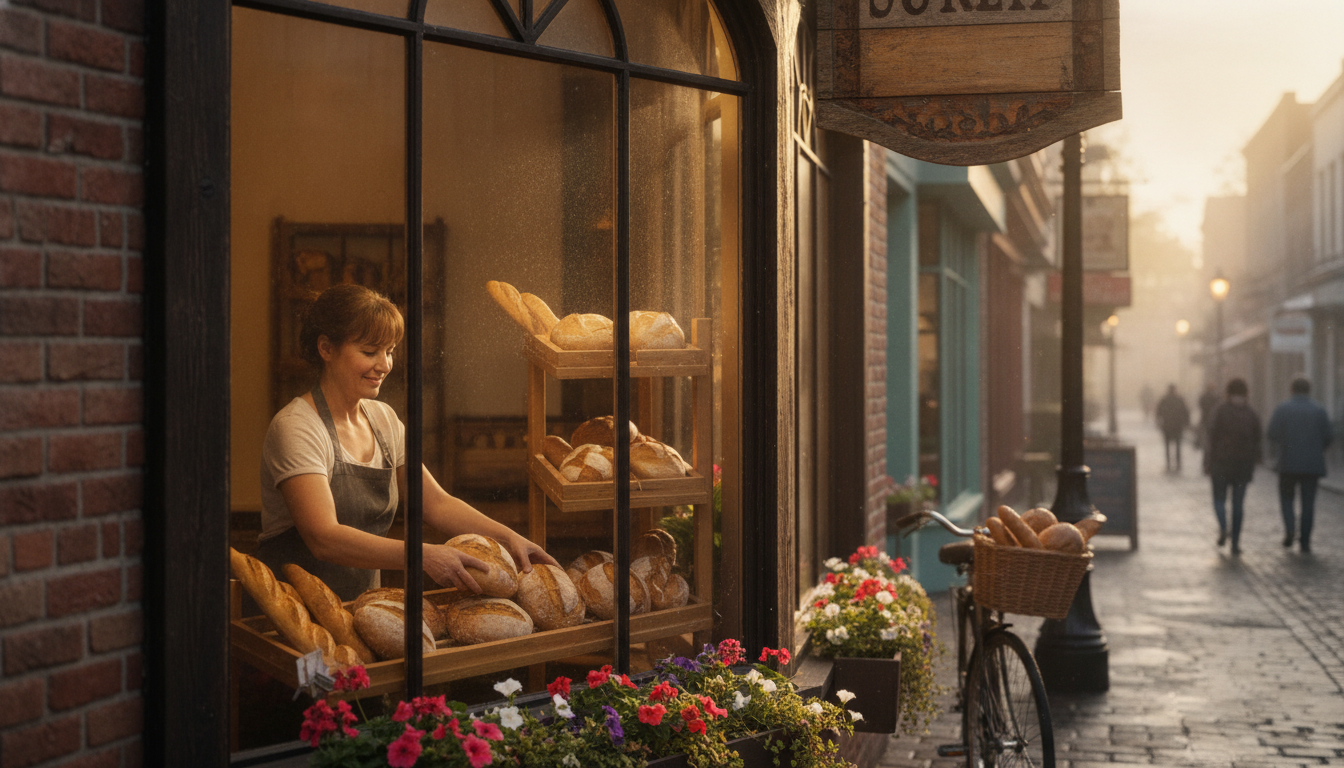
If you have ever felt behind because you did not post yesterday, you have been following the wrong playbook. The daily-posting rule was engineered for creators whose entire income depends on algorithmic reach - people whose audience follows them as a personality. Your customers follow you because you are two streets away, you do their hair, you make the best pie in the neighbourhood, or you fixed their plumbing at short notice. That is a fundamentally different relationship, and it runs on a completely different engagement logic. The evidence is consistent: for physical local businesses, three well-chosen posts per week reliably outperform seven rushed ones on every metric that matters - saves, shares, profile visits, and actual footfall.
Why Frequency Is the Wrong Lever for Local Businesses
Volume-first content strategy makes sense when your goal is to maximise impressions across a cold, global audience. But local businesses are not fishing in an ocean - they are fishing in a pond. Your relevant audience is geographically bounded. Most of the people who will ever visit your business live within a two-mile radius, and many of them already follow you. Posting ten times a week does not expand that radius by a single metre. What it does do is dilute your average post quality, increase the chance of publishing something forgettable under time pressure, and steadily erode the attention your good posts deserve. Platforms weight engagement rate, not post count. A post that gets 80 saves and 40 shares from 600 followers tells the algorithm something far more interesting than five posts that each collect three likes.
The businesses that grow the fastest on social are not the most prolific posters. They are the ones whose posts people actually remember.
The Monday-Wednesday-Friday Skeleton
Three slots per week, spaced evenly, gives you consistent presence without compressing your calendar. Each slot has a distinct job, and that job shapes everything from the format to the caption length. The structure is simple enough to run in your head, specific enough to produce a meaningful variety of content, and repeatable enough that it becomes a habit rather than a decision.
- Monday - The Trust Post: Show what you actually do and how well you do it. A behind-the-scenes prep shot, a finished product with real craft visible, a short clip of a technique, or a customer result (with permission). This is not about selling - it is about reminding your neighbourhood why they chose you. Captions here should be short and grounded. 'Three hours of marinating for thirty minutes of joy' beats a feature list every time.
- Wednesday - The Useful Post: Give something away for free. A practical tip, a local recommendation, a seasonal heads-up, a simple how-to. This is the slot that earns saves and shares - the two signals that matter most for reach. A florist posting 'three flowers that last two weeks in a warm house' will outperform a promotional post on almost any metric. Useful content builds the kind of following that shows up when you need them.
- Friday - The Action Post: This is the only slot where you are allowed to ask for something. A booking, a visit this weekend, a limited special, a product drop, a review request. Friday posts work because intent is higher at the end of the week - people are planning their Saturday, their evening out, their errands. Keep the ask clear and the friction low. One call to action per post, always.

How to Batch-Build the Whole Week in Under 45 Minutes
The reason most owners abandon content plans is not lack of motivation - it is the daily decision cost. When you sit down Monday morning and ask 'what should I post today?', you are starting from zero every single time. Batching kills that friction entirely. Pick one slot in your week - Sunday evening, Tuesday lunch, whenever your shop has its quietest hour - and use it to produce all three posts in one sitting. Here is how that session actually runs.
- Minutes 0-10: Capture. Walk through your space or your week's work and shoot five to eight photos or short clips. Do not edit, do not filter, just capture raw material. Prioritise anything that shows your craft, your space, or something genuinely useful to a customer.
- Minutes 10-20: Select and assign. Pick the best image or clip for each of your three slots. Trust Post gets the one that best shows quality or process. Useful Post gets the one most likely to prompt a save. Action Post gets the cleanest, most appealing product or service shot.
- Minutes 20-35: Write the captions. For the Trust Post, write one or two sentences - specific, sensory, no hashtag spam. For the Useful Post, write the tip itself in plain language and end with 'save this for later'. For the Action Post, state the offer, state the availability, and end with one clear instruction. This is where AI assistance saves the most time - tools like Rulrr can turn a rough note into a publish-ready caption in seconds, so you are editing rather than writing from scratch.
- Minutes 35-45: Schedule all three. Pick Monday morning between 8am and 10am, Wednesday around 12pm, and Friday between 4pm and 6pm as your defaults. These windows consistently see the highest local engagement. Once scheduled, you do not touch it until next week's batch.
The Three Post Types That Consistently Outperform
Within the Monday-Wednesday-Friday structure, certain content formats have a track record across local business categories that is worth knowing before you decide what to shoot or write. These are not trends - they are durable formats that perform because they match how local audiences actually use social platforms.
- Process and craft content: A butcher breaking down a cut, a nail technician applying a complex design, a baker shaping dough, a personal trainer correcting form. These posts earn trust and time on screen simultaneously. They work in any format - still image, short reel, even a simple carousel of three steps.
- Hyper-local useful content: Tips that are specific to your neighbourhood, your season, your customer's actual life. A cleaning service posting 'what to do with your floors before a house viewing' in a street where homes are frequently listed will outperform any generic promotional post by a wide margin. Specificity is the differentiator.
- Social proof without the awkwardness: A photo of a customer result with a brief, genuine caption (and their permission) consistently outperforms owner-to-camera posts. The format works because it shows the outcome rather than claiming it. A yoga studio showing a student who started six months ago with a one-line caption from her is more persuasive than any discount offer.

Consistency Is the Compound Interest of Local Marketing
Three posts a week for twelve weeks is 36 touchpoints with your neighbourhood. Three posts a week for a year is over 150 moments of presence in your community's feed - each one reinforcing that you are open, good at what you do, and worth visiting. That accumulation is what daily posting at low quality can never achieve, because the signal gets lost in the noise. The owners who build the strongest local followings are not the ones who post the most - they are the ones whose content people expect and look forward to. The Monday-Wednesday-Friday framework, kept up consistently, is how you become that business. Rulrr's scheduling and AI content tools exist specifically so that the batching session stays under 45 minutes and the calendar stays full without the effort of starting from scratch every week.
Start this week. Not with a rebrand, not with a new camera, not with a content strategy document. Pick the best thing you made or did this week, write one honest sentence about it, and schedule it for Monday morning. Do the same for Wednesday and Friday. Run it for four weeks before you change anything. By week five, you will have more data about what your specific audience responds to than any generic best-practice guide could ever give you - and you will have done it without burning a single evening.