There is a well-documented pattern sitting inside almost every local business's transaction data, and most owners never act on it. A customer who visits once is a trialist. They liked what they saw enough to try it - but they have not decided anything yet. A customer who visits twice is curious, maybe warming up. But a customer who crosses the third-visit threshold? Research consistently shows they behave like a loyal regular from that point forward: spending more per visit, referring more friends, and churning far less often. The gap between visit two and visit three is not just another data point. It is the single highest-leverage moment in your entire retention funnel. And the overwhelming majority of local businesses are doing absolutely nothing specific about it.
Why the Third Visit Is a Different Kind of Milestone
Most local businesses treat customer follow-up like a megaphone: the same message goes to the same list, whether that person visited yesterday for the first time or has been coming in every fortnight for two years. That approach feels like marketing. It is actually noise. The psychology behind repeat-visit behaviour tells a more interesting story. After a first visit, a customer is still comparing you against alternatives. After a second visit, they have begun forming a preference. But after a third visit, something shifts - they stop actively evaluating and start defaulting. Your business becomes part of their routine. That is the line between a trialist and a regular, and it has enormous implications for how you communicate in the narrow window between visit two and visit three.
After three visits, customers stop asking 'should I go back?' They start asking 'when should I go back?' That one-word shift is worth more than any discount you could offer.
The Problem With Generic Follow-Up
Consider what most local businesses actually send after a visit: a thank-you email, maybe a review request, perhaps a blanket promotion the next time they run one. None of that is wrong, exactly - but none of it is built for the specific moment a customer is in. A person on their second visit needs a different nudge to a person on their twelfth. The second-visit customer is still forming their habit. They need something that makes the third visit feel easy, obvious, and rewarding - not a generic ten-percent-off voucher that you also sent to your entire list last Tuesday. The twelfth-visit customer is a loyal regular who you should be thanking and deepening a relationship with, not bribing with a coupon they do not need. When the same message goes to both, you are leaving the second-visit window almost entirely unworked.
- Visit 1: Focus on making the follow-up warm and specific - reference what they actually ordered or did, not a generic 'thanks for visiting'.
- Visit 2: This is your highest-leverage message - make the third visit feel like the obvious next step with a personalised reason to return, not a discount.
- Visit 3: Acknowledge the pattern. A subtle 'you're becoming a regular' message lands with surprising warmth and reinforces the identity they are building.
- Visit 5+: Shift from nudging to rewarding. These customers need to feel recognised, not marketed to.
- Visit 10+: They are advocates. Ask for referrals, early access input, or a review - not another generic offer.
Building the Visit-Cadence Message Map
The practical challenge most owners hit here is not motivation - it is information and execution. To market to visit-two customers differently, you need to know who they are. That means connecting your point-of-sale or booking data to your outreach, and setting up message logic that fires based on where each customer sits in their visit count, not just when they were last seen. For most small businesses, this has historically required either expensive CRM software or a manual process nobody has time for. The smarter path is to tie your transaction data directly to automated, visit-aware outreach - so that the moment a customer hits visit two, a specific message goes out, and the moment they hit visit three, a different one follows. Rulrr does exactly this by connecting POS data to personalised campaign logic, so the third-visit threshold stops being a happy accident and starts being a predictable outcome you engineer.
What a Visit-Aware Message Actually Looks Like
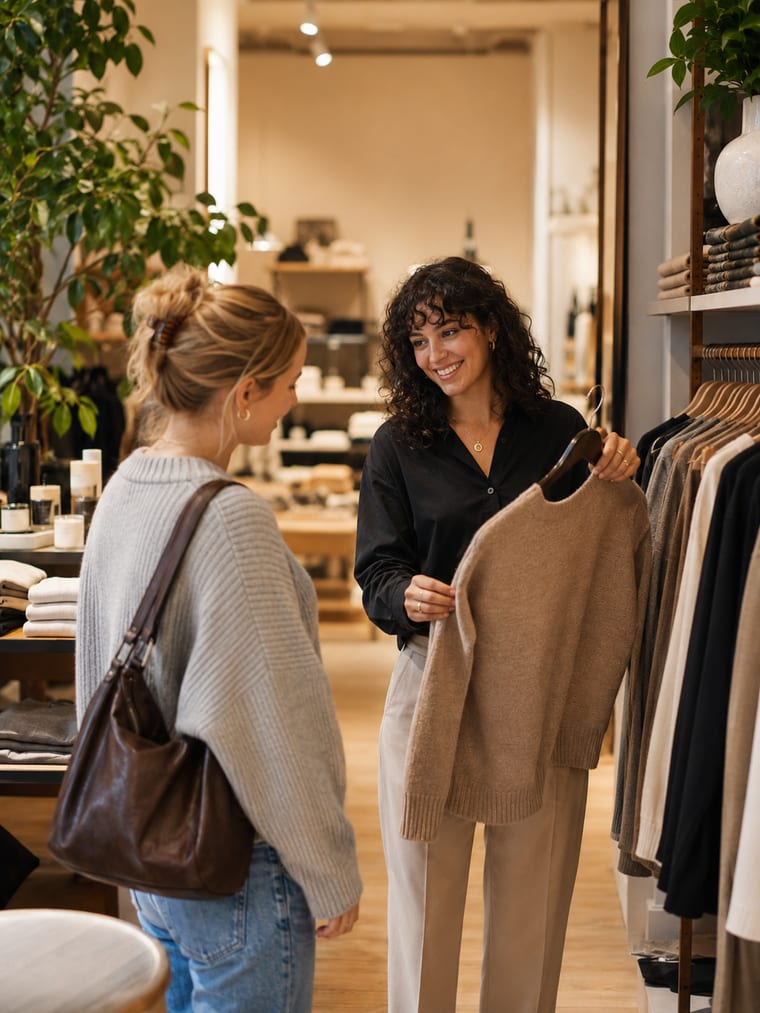
Mechanics aside, the message itself matters enormously. A visit-two outreach that works is not a discount - it is a reason. Something that makes the third visit feel rewarding before it even happens. For a restaurant, that might be a message referencing the dish they ordered last time and introducing something adjacent they have not tried yet. For a hair salon, it might be a note timed to four weeks after their cut - the natural regrowth window - with a subtle prompt rather than a hard sell. For a boutique, it might be a 'new arrivals just landed' message that feels like insider information, not a blast campaign. The specificity is what does the work. Generic follow-up tells a customer you remember they exist. Visit-specific follow-up tells them you remember who they are.
The Retention Math Behind the Third Visit
Run the numbers on your own customer base and the picture becomes very clear, very quickly. If your average transaction value is $45 and a loyal regular visits 18 times a year, that customer is worth $810 annually. If you currently convert 20% of second-visit customers to a third visit through passive follow-up, and visit-aware messaging lifts that conversion rate to 35%, you are not talking about a marginal gain. You are talking about a compounding shift in the composition of your customer base - fewer one-and-done visitors eroding your margins, more regulars anchoring your revenue floor. The cost of sending a more specific message to your second-visit customers is nearly zero. The cost of not sending it is every regular who never became one.
Three Things to Do Before Next Week
- Pull your visit-frequency data: Segment your customer list by visit count - first-time, second-time, three-plus. If you have never done this, what you find will be instructive and probably surprising.
- Write three different follow-up messages: One for visit one, one specifically engineered for visit two, one that acknowledges visit three as a milestone. Even sending these manually to start is better than sending nothing.
- Identify your natural 'third visit window': For a restaurant it might be 10-14 days. For a salon it might be 4-6 weeks. For a gym it might be the first 21 days of a membership. Know your specific window - and make sure your visit-two message lands inside it.
Most of the retention revenue sitting untouched in local businesses is not hiding in exotic tactics. It is in the gap between a list that gets the same message and a system that knows exactly where each customer is in their relationship with you - and says the right thing at the right moment. That gap is closable. The businesses closing it are not the ones with the biggest budgets. They are the ones who stopped treating follow-up as a broadcast and started treating it as a conversation with a specific person at a specific point in time.