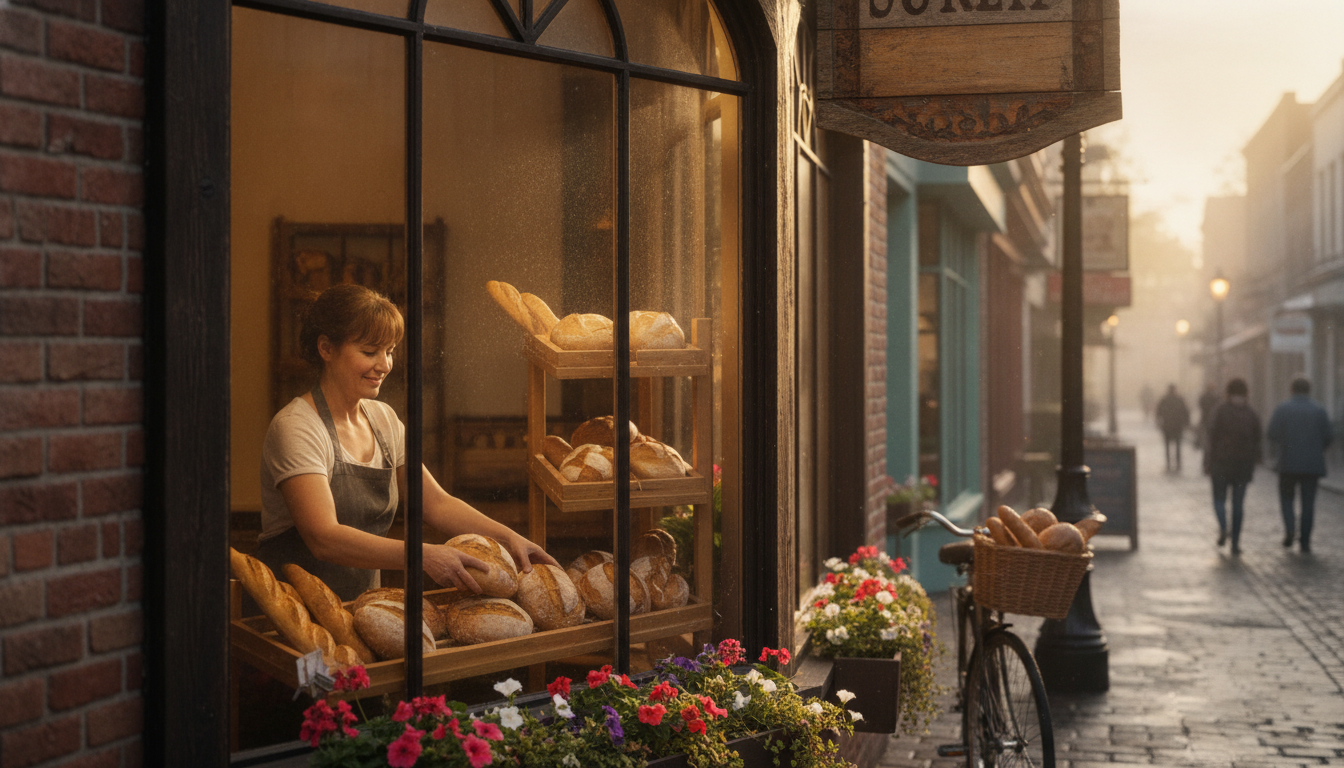
The idea was good. A midweek promotion - twenty percent off colour treatments on Wednesdays, when the chairs sat half-empty and the team stood around folding towels. The salon owner had thought of it on a Monday morning. By Thursday, it still hadn't gone out. She'd meant to write the caption. She'd meant to think through the offer wording. She'd meant to check when her regulars were most likely to open Instagram. None of it happened, because between the idea and the execution sat a pile of other things that were more urgent and easier to start. This is not a story about laziness or poor planning. It is the single most common marketing failure in local business - and it has nothing to do with strategy.
The Gap Is Not Between Knowing and Doing - It's Between Deciding and Launching
Most owners who struggle with marketing consistency are not short on ideas. Ask any salon owner, restaurant manager, or boutique retailer what promotions they should be running and they'll give you five in thirty seconds. The problem is the translation layer - the moment where a good idea has to become copy, an image, a specific offer, a target audience, and a scheduled post. That translation layer is where campaigns die. It requires a different kind of thinking than running a business. It requires sitting down, context-switching, and producing something from scratch under no immediate pressure. And for most owners, that moment never quite arrives.
I knew exactly what I wanted to say. I just never found the hour to say it properly. So I said nothing.
What AI-Assisted Campaign Creation Actually Looks Like in Practice
The practical shift AI brings to this problem is not about replacing your instincts - it's about removing the blank-page friction that stalls execution. When the Bristol salon owner started using Rulrr's AI Campaign Engine, the workflow changed completely. She typed a single sentence into the campaign builder: 'Quiet Wednesdays, want to fill colour bookings, offer twenty percent off, target existing clients.' What came back in seconds was a complete campaign draft: three caption variations for Instagram and Facebook, a suggested offer structure with a clear expiry window to create urgency, and a recommended send time based on when her audience historically engaged. She picked one caption, adjusted two words, and scheduled it. Total time: nine minutes.

The Three Decisions AI Handles So You Don't Have To
There are three micro-decisions that consistently stall campaign execution for local owners. They each seem small in isolation, but together they create enough friction to kill a promotion before it starts.
- The copy problem: What exactly do I write? Most owners spend more time second-guessing the tone, the length, and the CTA than they ever spend thinking about the offer itself. AI draft copy eliminates the starting point problem entirely - you edit from something rather than writing from nothing.
- The offer structure problem: Should it be a percentage or a fixed amount? Does it need a minimum spend? How long should it run? AI campaign tools surface the structures that work for your business type and goal, so you're not reinventing the wheel on every promotion.
- The timing problem: Is Tuesday evening better than Thursday morning? Most owners guess. AI-assisted scheduling uses engagement pattern data to recommend send windows with a reason behind them - not a gut feeling dressed up as strategy.
- The audience problem: Should this go to everyone, or just customers who haven't booked in six weeks? Targeting decisions feel complex when you're doing them manually. When your platform handles the logic, you make the call in one click.
Why Wednesday Worked - and What It Actually Proves

Speed Is a Marketing Strategy
The salon's busiest Wednesday in four months did not happen because the campaign was exceptional. The caption was good, not brilliant. The offer was solid, not revolutionary. What made it work was that it actually went out - on time, to the right people, with a clear call to action. Marketing that launches beats marketing that's still being perfected in a notes app. The compounding advantage for businesses that reduce their campaign execution time is real: more promotions get out the door, more seasonal moments get captured, more quiet days get activated. The owners who post consistently are not more creative than the ones who don't. They have removed the friction between the idea and the live campaign.
The shift Rulrr is built around is exactly this: the AI Campaign Engine doesn't ask you to become a better marketer. It asks you for a direction and a goal, then handles the execution layer that was always the bottleneck. For a salon owner filling midweek chairs, a restaurant activating a slow Tuesday lunch shift, or a boutique running a seasonal clearance, the value is the same - a half-formed idea becomes a live, targeted campaign before the morning coffee goes cold. That's not a technology story. It's a business operations story. And for local owners running on compressed time, it's the one that actually changes the week.